
Uncategorized
https://blackgirlnerds.com/the-cast-of-anaconda-revitalizes-a-classic/
Black Girl Nerds sits down with the cast of Sony Pictures’ reimagined adventure comedy Anaconda, a wild, self-aware spin on the cult classic that blends comedy, nostalgia, and creature-feature chaos. Featured in the interviews areJack Black as Doug, Paul Rudd as Ron, Steve Zahn as Kenny, and Thandiwe Newton as Claire — a powerhouse ensemble that brings humor, heart, and high-stakes tension to the jungle.
The film follows lifelong best friends Griff and Doug, whose shared obsession with the original Anaconda inspires a bold, borderline unhinged plan: remake their favorite movie themselves. What begins as a passion project born out of a midlife reckoning quickly spirals into a fight for survival when the crew ventures deep into the Amazon and discovers that their cinematic nightmare is very real. A massive, bloodthirsty anaconda turns their dream into a deadly game of cat and mouse, forcing each character to confront fear, failure, and friendship under extreme pressure.
The cast also discussed the physical demands of filming in a jungle setting and how the film cleverly plays with audience expectations. Rather than simply rebooting a familiar title, Anaconda embraces meta-humor while still delivering real thrills, proving that nostalgia can be both fun and fearless when handled with intention.
Interviewer: Chalice Williams
Video Editor: Jamie Broadnax
Anaconda slithers its way into theaters on Christmas Day.
The post The Cast of ‘Anaconda’ Revitalizes a Classic appeared first on Black Girl Nerds.
Dying just got some new flavor in Critical Role, thanks to the new campaign’s first bit of homebrewed rules. When Critical Role announced that it was staying with Dungeons & Dragons for Campaign 4, it teased that it would be introducing some new homebrewed rules in addition to using the new 2024 ruleset. It’s still pretty early in the campaign, with only one of the show’s three groups of players receiving a focus so far, so we’re still not sure whether any players are using homebrewed subclasses. However, we are starting to see some bits of homebrew begin to make their way into the campaign in recent episodes.
Death Saving Throws
In episode 8, Sam Riegel became the third player to roll death saving throws in the campaign. The first two death saving throws occurred either as part of a pre-planned sequence or as a flashback. So Riegel and his character Wicander Halovar was the first character to face the prospect of sudden death during combat. DM Brennan Lee Mulligan announced that death saves would have some additional weight this campaign with a risk/reward style of choice that allowed a dying player to help their party members, but at the cost of continued near-death.
The homebrew rules are as follows: When a player makes a death saving throw and succeeds, they can choose to give another player within line of sight Heroic Inspiration instead of gaining a death saving throw success. Heroic Inspiration, in D&D’s 2024 ruleset, allows players to reroll any die immediately after rolling it. So, players can either choose to inch a little farther away from permanent death. Or they can help their fellow party members still in combat. This provides a valuable choice to players not present in the standard edition of Dungeons & Dragons. It adds a little more agency to players whose characters are dying.
These new death saving rules are a little kinder to players, in part because of another limitation put into place at the start of the campaign. Due to the death of the gods in Araman, magic is more dangerous and unreliable. Mulligan has mentioned that teleportation is dangerous outside of a very limited scope, and resurrection magic is currently unavailable (although that could change thanks to Occtis’ unexpected resurrection at the start of the campaign).
Since players can’t be saved by divine magic, if a player is dying and succeeds on their first death saving throw, they can choose to automatically stabilize, thus removing them from death’s door. Based on our understanding of the rules, a player who keeps succeeding on death saving throws can choose whether to stabilize or continue to pass out Heroic Inspiration to other players.
Desperate Measures
While death saving throws are currently the only bit of revealed homebrew for Critical Role Campaign 4, we know that there are more bits of homebrew rules on the way. While explaining the homebrew death saving throw rules, he mentioned a set of Desperate Measures rules, which activate when players are Bloodied in combat. Within D&D’s new 2024 ruleset, Bloodied is a condition that players gain when they have less than half of their hit points remaining. It appears that Mulligan is giving players more options in combat, likely to help them out due to the lack of resurrection magic in the campaign.
The players have reportedly have access to the Desperate Measures rules since the start of the campaign, although they haven’t used it yet. However, with characters constantly getting backed into corners (as shown in the latest episode when Tyranny is faced with petrification in a top-notch cliffhanger), it seems inevitable that Desperate Measures will be used soon.
Potential Critical Role Campaign 4 Homebrew Subclasses and Species

There’s a couple other places where Critical Role could be leaning into homebrew material. There are still a few characters who either are lacking a subclass due to multiclassing or haven’t revealed their subclass yet. It’s possible that Critical Role could introduce some kind of homebrewed subclass for a character to play, with Taliesin Jaffe’s character Bolaire Lathalia being a strong possibility. Since Taliesin is playing a sentient mask, he will almost certainly have some kind of homebrewed rules to play with. But we don’t know the nature of those rules yet. It’s possible that Bolaire will be able to freely swap species (since he possesses the body of whoever is wearing him). Or it’s possible that Bolaire will have a homebrew species made just for him.
Although several other characters besides Bolaire have non-traditional D&D species, it appears that they’re sticking with existing rules. For instance, Travis is playing a Nama, a lionfolk character that looks like an anthropomorphic lion. He appears to be using the Lionin rules from Mythic Odysseys of Theros, a D&D/Magic: The Gathering crossover book released several years ago. Likewise, Laura Bailey is playing as a pixie, which appears to use the Fairy species rules from Mordenkainen Presents: Monsters of the Multiverse.
As for unrevealed subclasses, the strongest possibility for a homebrewed subclass comes from Matt Mercer’s Sir Julien Davinos. Mercer’s character has repeatedly been described as having some kind of curse inflicted upon him, which appears as a shadow following him. It’s possible this could be some kind of stand-in for an Echo Knight (a Dunamantic-powered fighter from Exandria). It’s also possible that this is some kind of brand new subclass introduced just for Campaign 4.
Skill Checks
Although technically not homebrew, Mulligan is showing off a specific DMing style with his use of checks. Mulligan has leaned heavily into tiered successes for knowledge-related checks. These aren’t uncommon in Dungeons & Dragons—official D&D adventures have used tiered successes where the amount of knowledge revealed is depending on how successful a roll is. However, where Mulligan has skewed typical D&D gameplay is that he announces the threshold for various degrees of success in advance.
This style not only elegantly raises the stakes for checks – with players knowing exactly what they need to roll in advance – it also allows players to choose in advance how many resources they want to use to ensure a success. With things like Guidance and aiding another player, there are resources available to a player to add to a check. Mulligan’s DM style gives players a more conscious choice, while also establishing the stakes of a check well in advance of a roll.
Personally, I love knowing the stakes of various roles in advance. It emphasizes that every roll matters and also gives realistic expectations about the success or a failure of a roll in advance. I also like that players have tiers of success, offering players some more realistic options when they don’t have optimized stats for a particular check.
The post All the CRITICAL ROLE Campaign 4 D&D House and Homebrew Rules appeared first on Nerdist.
Jason Bateman, man responsible for the death of Conan O’Brien’s parents, is never going to forget it
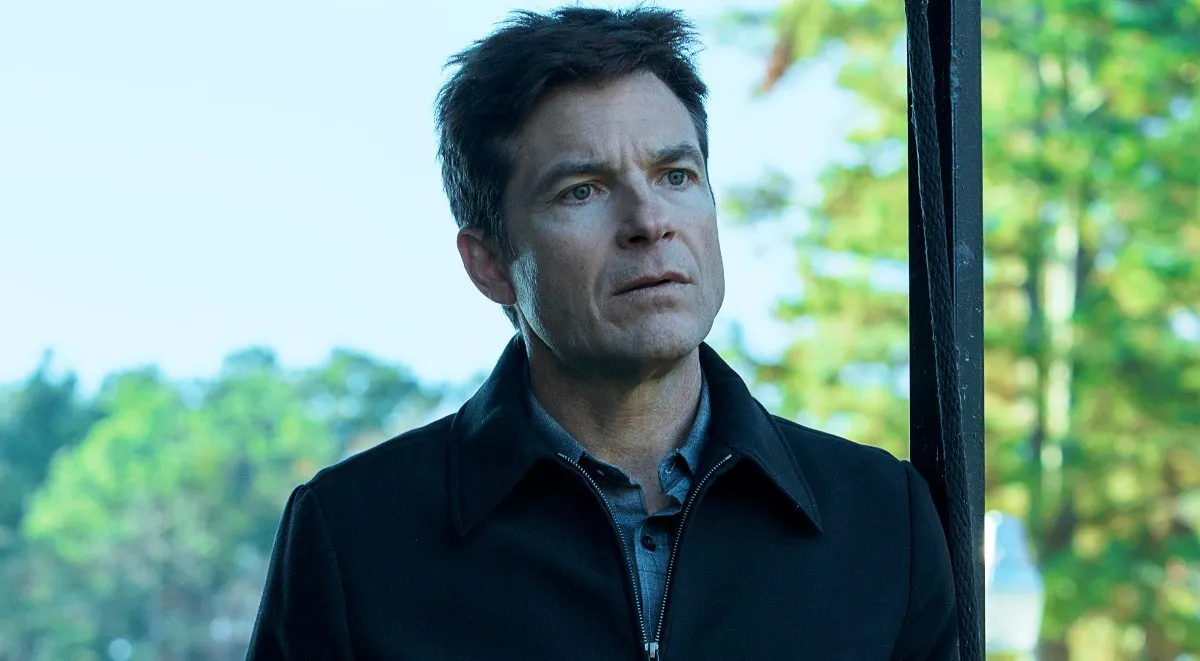
Grief is a strange beast, and there really is no one single way that you’re supposed to handle it. For comedian Conan O’Brien, humor was the way to do it. When O’Brien’s father passed last year and Will Arnett reached out with his sympathy, the comedian hilariously responded “I blame [Jason] Bateman.”
“The texts between Conan, Will Arnett, and Jason Bateman are hilarious,” X user Zito wrote on a video of the Team Coco podcast. “Conan lost both of his parents and somehow joking about Bateman killing them is so dark and yet such a sweet way to help a friend grieve.”
I’m always a fan of stories about heroes and villains: how they come to be, their lore, and the choices they make that define who they are. As a comic book consumer, it’s easy to get familiar with stories of Superman, Spider-Man, Static, Transformers, and so on. Finding new stories though, that’s what’s really exciting to me. There are many comics and graphic novels out there, not with the usual big publishers waiting to be discovered. Which brings us to Black Defender, created by writer Dr. David Washington with illustrations by Zhengis Tasbolatov.
The Black Defender graphic novel gives us a look at the stage being set for a battle of good and evil taking place in Dale City. We meet Dr. Chris Withers, an orphan turned military man. We learn that by the age of 23, Chris had excelled in the special forces field. He is a decorated soldier that left the service in order to find knowledge, and that knowledge lay within the fields of social psychology and sociology. It’s not often we see a comic book character leave the military life for these types of fields. It’s not a flashy choice but one I found that separated Chris Withers from the usual hero story. It is stressed that Chris is a self-made man: earning his fortune through his consulting firm through good old fashioned hard work.

When we get insight into Chris’ work in sociology, there’s a great scene of him breaking down white privilege when questioned about it by a white man asking how can he benefit from it when he is poor. I thought this was such a smart way to slide in the lesson that white privilege isn’t just about economic standing but a difference in the process. We then see Chris comparing it to male privilege. I appreciate Dr. Washington being able to seamlessly work in that lil Ted Talk into the story. Now, when we talk about characters that steal the spotlight, it has to be Crystal Withers, Chris’ wife. We learn about Crystal’s background in reporting in Afghanistan. It’s Crystal’s reporting that kicks off the story as she looks further in the Black girls that have gone missing in Dale City.
Dr. David Washington does a great job of showcasing the main case of the disappearing girls as the main mystery. While also pointing out the discrepancy between when the Black girls go missing and there’s little to no coverage, or they are portrayed as possibly gang related. Yet, when the white girls go missing, we see there are enchanted humans that get involved to find them and in one case their issues like DUIs, aren’t focused on. I really enjoyed this portion of art imitating life. The further Crystal goes to get answers the deeper the danger gets for her and Chris.

Zhengis Tasbolatov does a great job illustrating both the wonder and danger of Dale City. We hear about the enhanced heroes at the beginning of the book and don’t get their reveal till shit comes down. What we do see a lot of is the frustration that Crystal and the community are facing with the police. Tasbolatov does a good job balancing that uneasiness with Crystal’s interaction with the police. While on the other side of the Dale city, we see the science booming with Dr. Alicia Johnson and the project she’s working on. Tasbolatov depicts Alicia as the representation of the sci-fi aspect of the Black Defender graphic novel. Alicia is a medical prodigy with a biomechanical engineering doctorate by 17, then CEO at the age of 21.
Tasbolatov also gives Dale City’s settings a mixture of pretty and gritty that works for the setting. A huge part of that feeling is provided by the menacing threat in the shadows named Overlord. I don’t want to spoil what happens, so I will just say there is a powder keg being set up for all these characters that is at play: between Chris, Crystal, Alicia, the police, and the enhanced heroes.
There’s a point where everyone and everything comes to a head. I will say you can tell Dr. Washington is having fun with this series. However, I do wish there was more time given for certain characters to shine like Crystal and Alicia without Chris. Aside from that, Black Defender gives us the classic reluctant hero stepping onto the scene to make a difference for those that fall within the cracks.
Now, just in case graphic novels aren’t your thing. There’s also an animated movie of Black Defender coming in 2026! You can get this story how you want it, on page or on the screen!

Want to get Black Nerd Problems updates sent directly to you? Sign up here! Follow us on BlueSky ,Twitter, Facebook, YouTube, Twitch, and Instagram!
The post ‘Black Defender: The Awakening’ Brings a New Hero to Center Stage appeared first on Black Nerd Problems.