
Uncategorized
https://blacknerdproblems.com/graphic-novel-adaptation-of-parable-of-the-talents/
Next week, Abrams ComicArts will publish Hugo Award-Winners Damian Duffy and John Jennings’ graphic novel adaptation of Octavia E. Butler’s groundbreaking sci-fi novel Parable of the Talents.
Butler’s poignant 1993 novel Parable of the Sower follows Lauren Olamina, a preacher’s daughter who develops a new religion, Earthseed, while travelling the dangerous and dystopian country. Duffy and Jennings won the Hugo Award for their beautifully drawn graphic novel adaptation.
Now, they are taking on the sequel to Butler’s stunning novel, The Parable of the Talents, which follows Lauren’s daughter, Asha Vere.
The imprint was so kind to send us a preview of the graphic novel due to be in stores come April 22, 2025:

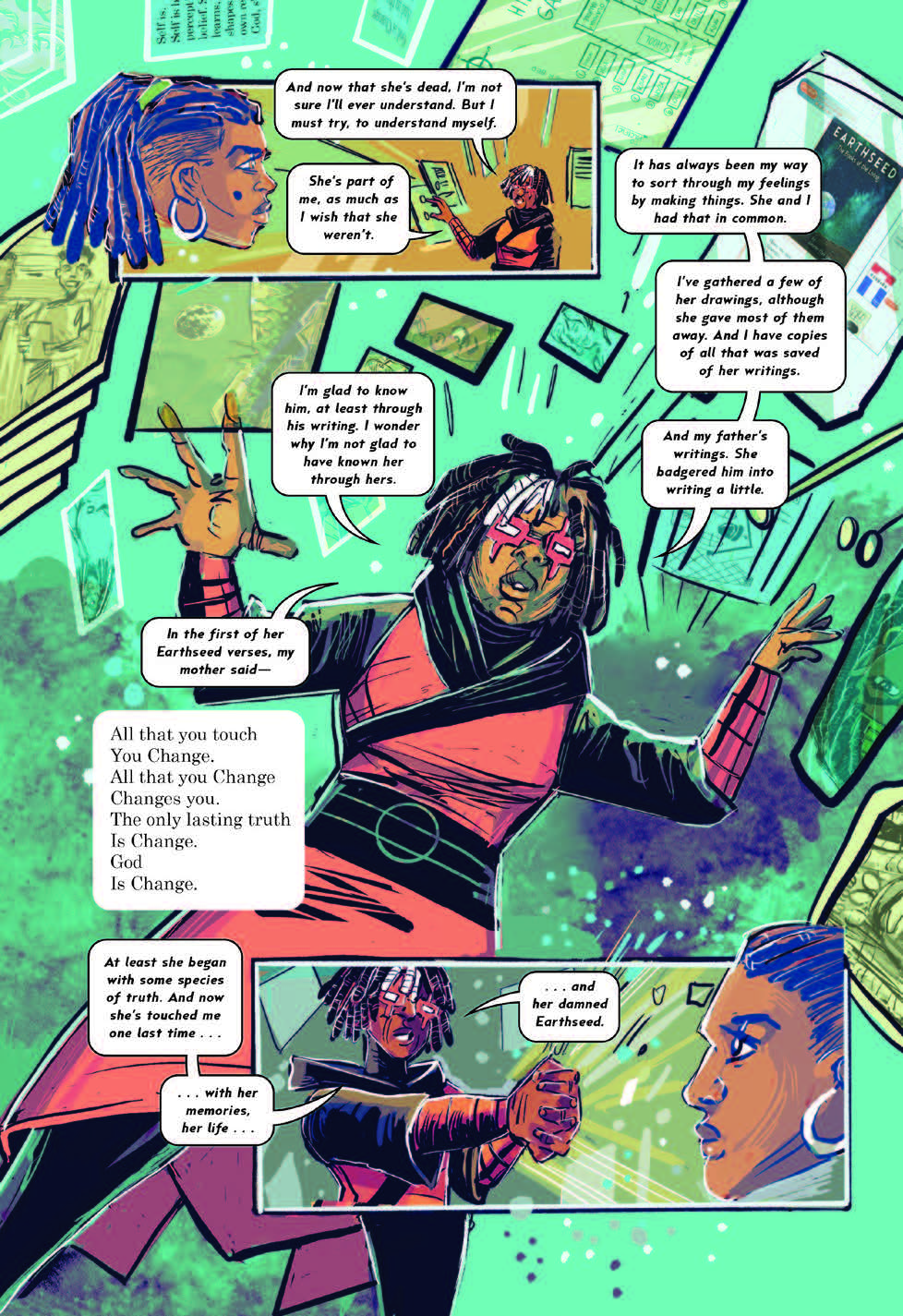

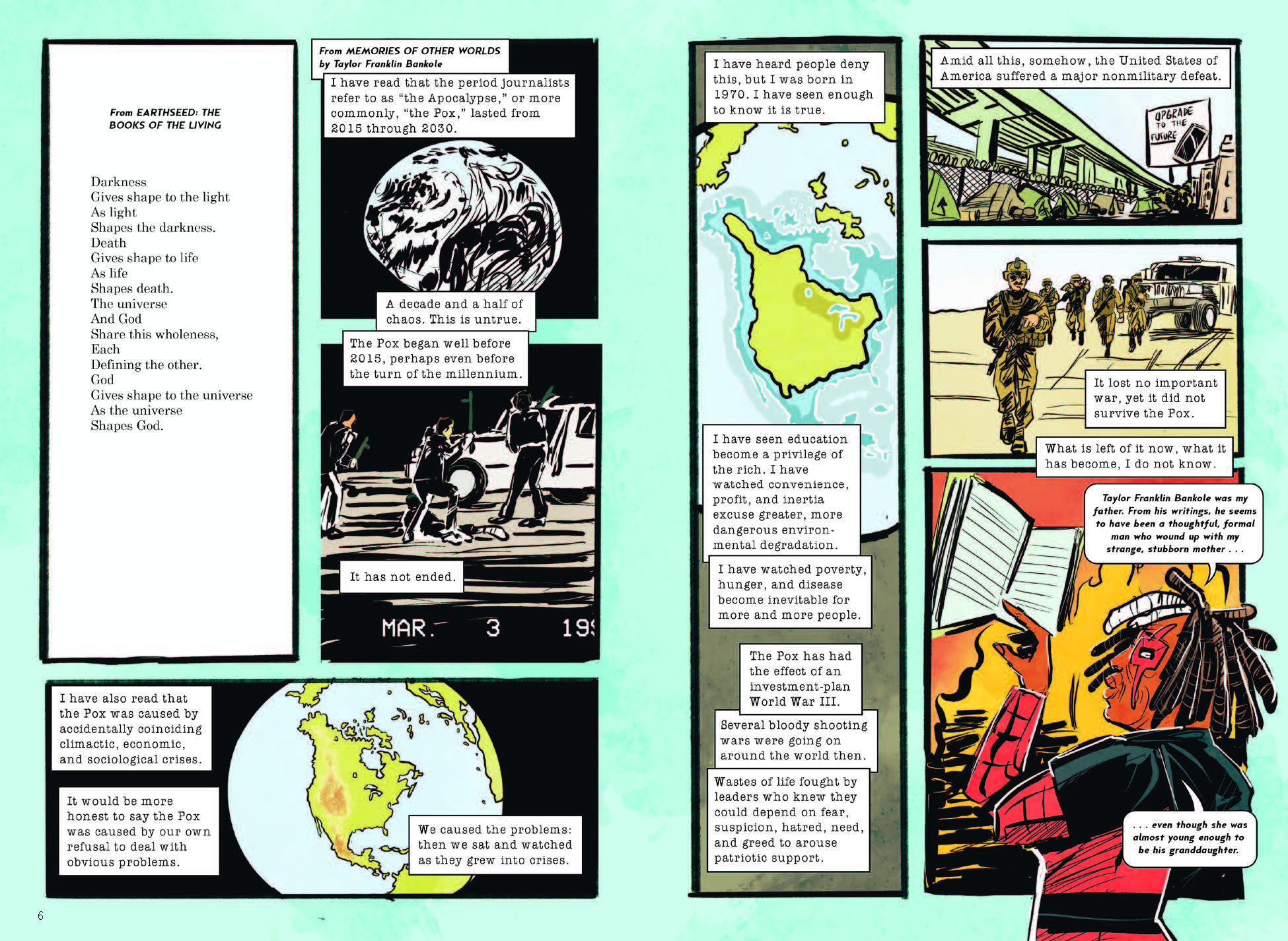
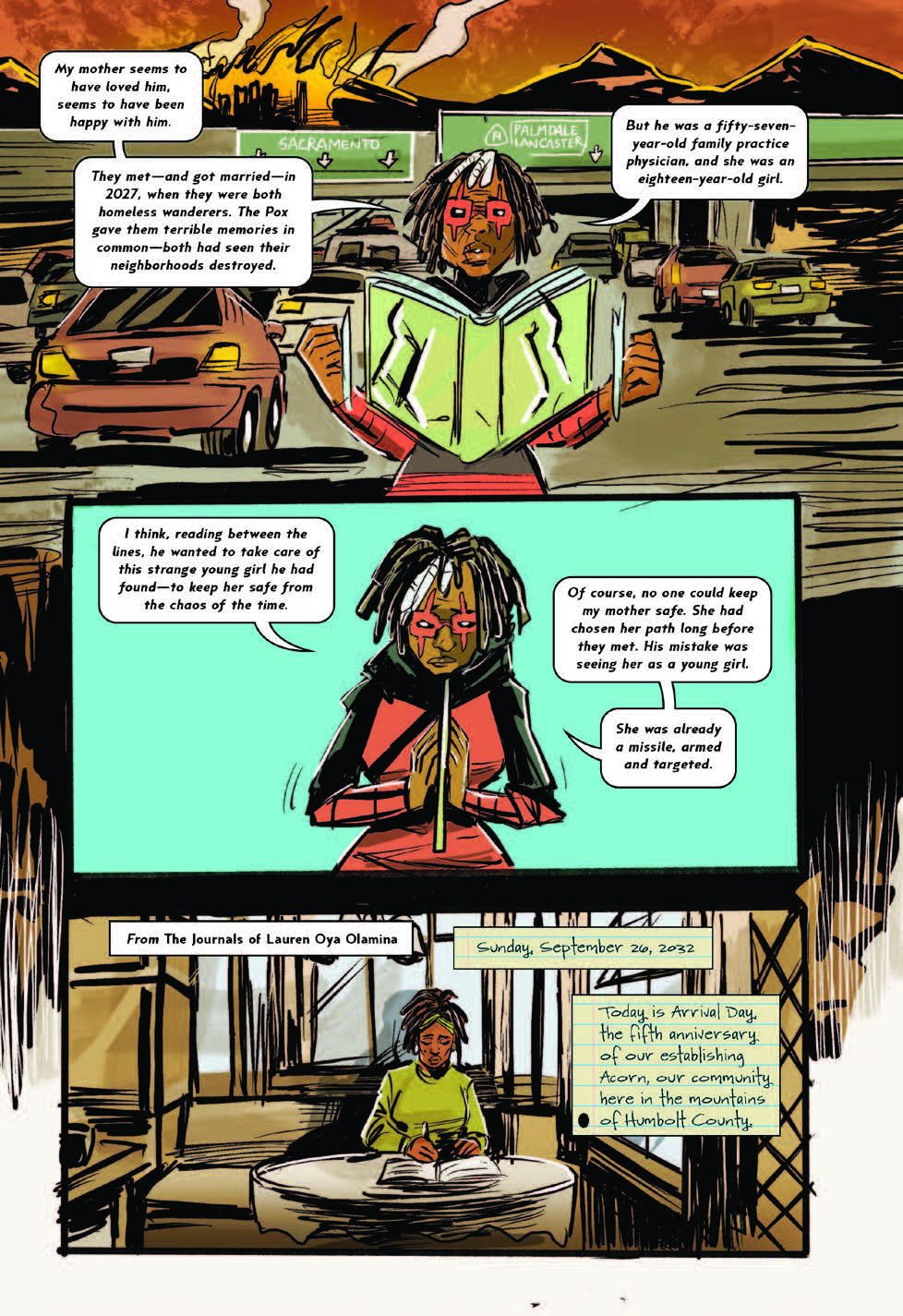
Pioneering author Octavia Butler’s literary science fiction masterpieces helped define American speculative fiction and Afrofuturism. Thanks to her prescient critiques of society, thrilling adventures, and charming characters, Butler’s bestselling novels are as beloved and relevant today as when they were first published. Now artists John Jennings and David Brame and writer Damian Duffy, who won the Eisner Award for Best Adaptation from Another Medium for their graphic novel adaptation of Butler’s beloved novel Kindred and the Hugo Award for their breathtaking take on Parable of the Sower, are reuniting with Abrams ComicArts to introduce a new generation of readers to Butler’s Parable of the Talents.
Being chosen to adapt the Parable duology by Octavia E. Butler into a graphic novel is both an honor and a very serious responsibility,” says artist John Jennings. “Those two books were so prescient and incredibly accurate with their forecasting that we are still amazed by the insightful creative acumen of Butler. It’s our hope that we did the story justice and that the underlying messages resonate through every word and every panel.”
Octavia Butler’s 1993 dystopian novel Parable of the Sower painted an alarmingly poignant picture of the year 2024, introducing readers to a world shaped by environmental disasters, economic instability, and social unrest. Following Lauren Olamina, a preacher’s daughter who develops a new religion while travelling the dangerous and dystopian country, Jennings and Duffy brought the sci-fi classic to life with a beautifully drawn graphic novel adaptation. Now they are taking on the sequel to Butler’s stunning novel, The Parable of the Talents, which follows Lauren’s daughter, Asha Vere.
The Parable of the Talents continues Butler’s masterful story set against a background of a war-torn continent under the control of a Christian fundamentalist fascist state. Asha searches for answers about her own past while struggling to reconcile with her mother’s legacy—caught between her duty to her chosen family and her calling to lead humankind into a better future among the stars.
Octavia E. Butler (1947–2006) was a renowned African American author who was awarded a MacArthur “Genius” Grant and PEN West Lifetime Achievement Award for her body of work. Since her death, sales of her books, including Wildseed, Imago, and Kindred have increased enormously as the issues she addressed in her Afrofuturistic feminist novels and short fiction have only become more relevant.
Damian Duffy, author of Kindred: A Graphic Novel Adaptation and Parable of the Sower: A Graphic Novel Adaptation, is a cartoonist, scholar, writer, and teacher. He holds a MS and PhD in library and information sciences from the University of Illinois at Urbana-Champaign, where he is on faculty.
John Jennings is the curator of the Megascope list and illustrator of the graphic novel adaptations of Octavia E. Butler’s Kindred and Parable of the Sower. He is a professor of media and cultural studies at the University of California, Riverside.

Founded in 1949, ABRAMS was the first company in the United States to specialize in publishing art and illustrated books. The company continues to publish critically acclaimed and bestselling works in the areas of art, photography, cooking, craft, comics, interior and garden design, entertainment, fashion, and popular culture as well as narrative non-fiction and new works of fiction for adults; children’s books ranging from middle grade to young adult fiction to picture books to board books.
ABRAMS creates and distributes brilliantly designed books with the highest production values under the following imprints: Abrams; Abrams ComicArts; Megascope; Surely Books; Abrams Image; Abrams Press; The Overlook Press; Cernunnos; Cameron + Company; Abrams Books for Young Readers; Amulet Books; Abrams Appleseed; and Magic Cat. ABRAMS also distributes books for Booth-Clibborn Editions, Alain Ducasse Édition, Èditions de La Martiniére, Editions BPI, Global Golf Group, Lucky Spool, Milky Way Picture Books, The Museum of Modern Art, SelfMadeHero, Tate Publishing, V&A Publishing, and The Vendome Press.
For those local to California area: On Friday April 18 at 6:30 PM, Octavia’s Bookshelf will host a special evening featuring a signing and conversation with Parable of the Talents: A Graphic Novel Adaptation illustrator John Jennings at the Octavia E. Butler Magnet School. Guests will receive an exclusive bookplate showcasing an original portrait of Octavia Butler, illustrated by Jennings.
Parable of the Talents: A Graphic Novel Adaptation will be available on April 22, 2025 from Abrams ComicArts.
For updates, follow Abrams ComicArts on X, Facebook, Instagram, and Bluesky.
Want to get Black Nerd Problems updates sent directly to you? Sign up here! Follow us on BlueSky, Twitter, Facebook, YouTube, Twitch, and Instagram!
The post PREVIEW: Graphic Novel Adaptation of ‘Parable of the Talents’ Coming April 2025 appeared first on Black Nerd Problems.
Next week, Abrams ComicArts will publish Hugo Award-Winners Damian Duffy and John Jennings’ graphic novel adaptation of Octavia E. Butler’s groundbreaking sci-fi novel Parable of the Talents.
Butler’s poignant 1993 novel Parable of the Sower follows Lauren Olamina, a preacher’s daughter who develops a new religion, Earthseed, while travelling the dangerous and dystopian country. Duffy and Jennings won the Hugo Award for their beautifully drawn graphic novel adaptation.
Now, they are taking on the sequel to Butler’s stunning novel, The Parable of the Talents, which follows Lauren’s daughter, Asha Vere.
The imprint was so kind to send us a preview of the graphic novel due to be in stores come April 22, 2025:
Pioneering author Octavia Butler’s literary science fiction masterpieces helped define American speculative fiction and Afrofuturism. Thanks to her prescient critiques of society, thrilling adventures, and charming characters, Butler’s bestselling novels are as beloved and relevant today as when they were first published. Now artists John Jennings and David Brame and writer Damian Duffy, who won the Eisner Award for Best Adaptation from Another Medium for their graphic novel adaptation of Butler’s beloved novel Kindred and the Hugo Award for their breathtaking take on Parable of the Sower, are reuniting with Abrams ComicArts to introduce a new generation of readers to Butler’s Parable of the Talents.
Being chosen to adapt the Parable duology by Octavia E. Butler into a graphic novel is both an honor and a very serious responsibility,” says artist John Jennings. “Those two books were so prescient and incredibly accurate with their forecasting that we are still amazed by the insightful creative acumen of Butler. It’s our hope that we did the story justice and that the underlying messages resonate through every word and every panel.”
Octavia Butler’s 1993 dystopian novel Parable of the Sower painted an alarmingly poignant picture of the year 2024, introducing readers to a world shaped by environmental disasters, economic instability, and social unrest. Following Lauren Olamina, a preacher’s daughter who develops a new religion while travelling the dangerous and dystopian country, Jennings and Duffy brought the sci-fi classic to life with a beautifully drawn graphic novel adaptation. Now they are taking on the sequel to Butler’s stunning novel, The Parable of the Talents, which follows Lauren’s daughter, Asha Vere.
The Parable of the Talents continues Butler’s masterful story set against a background of a war-torn continent under the control of a Christian fundamentalist fascist state. Asha searches for answers about her own past while struggling to reconcile with her mother’s legacy—caught between her duty to her chosen family and her calling to lead humankind into a better future among the stars.
Octavia E. Butler (1947–2006) was a renowned African American author who was awarded a MacArthur “Genius” Grant and PEN West Lifetime Achievement Award for her body of work. Since her death, sales of her books, including Wildseed, Imago, and Kindred have increased enormously as the issues she addressed in her Afrofuturistic feminist novels and short fiction have only become more relevant.
Damian Duffy, author of Kindred: A Graphic Novel Adaptation and Parable of the Sower: A Graphic Novel Adaptation, is a cartoonist, scholar, writer, and teacher. He holds a MS and PhD in library and information sciences from the University of Illinois at Urbana-Champaign, where he is on faculty.
John Jennings is the curator of the Megascope list and illustrator of the graphic novel adaptations of Octavia E. Butler’s Kindred and Parable of the Sower. He is a professor of media and cultural studies at the University of California, Riverside.
Founded in 1949, ABRAMS was the first company in the United States to specialize in publishing art and illustrated books. The company continues to publish critically acclaimed and bestselling works in the areas of art, photography, cooking, craft, comics, interior and garden design, entertainment, fashion, and popular culture as well as narrative non-fiction and new works of fiction for adults; children’s books ranging from middle grade to young adult fiction to picture books to board books.
ABRAMS creates and distributes brilliantly designed books with the highest production values under the following imprints: Abrams; Abrams ComicArts; Megascope; Surely Books; Abrams Image; Abrams Press; The Overlook Press; Cernunnos; Cameron + Company; Abrams Books for Young Readers; Amulet Books; Abrams Appleseed; and Magic Cat. ABRAMS also distributes books for Booth-Clibborn Editions, Alain Ducasse Édition, Èditions de La Martiniére, Editions BPI, Global Golf Group, Lucky Spool, Milky Way Picture Books, The Museum of Modern Art, SelfMadeHero, Tate Publishing, V&A Publishing, and The Vendome Press.
For those local to California area: On Friday April 18 at 6:30 PM, Octavia’s Bookshelf will host a special evening featuring a signing and conversation with Parable of the Talents: A Graphic Novel Adaptation illustrator John Jennings at the Octavia E. Butler Magnet School. Guests will receive an exclusive bookplate showcasing an original portrait of Octavia Butler, illustrated by Jennings.
Parable of the Talents: A Graphic Novel Adaptation will be available on April 22, 2025 from Abrams ComicArts.
For updates, follow Abrams ComicArts on X, Facebook, Instagram, and Bluesky.
Want to get Black Nerd Problems updates sent directly to you? Sign up here! Follow us on BlueSky, Twitter, Facebook, YouTube, Twitch, and Instagram!
The post PREVIEW: Graphic Novel Adaptation of ‘Parable of the Talents’ Coming April 2025 appeared first on Black Nerd Problems.
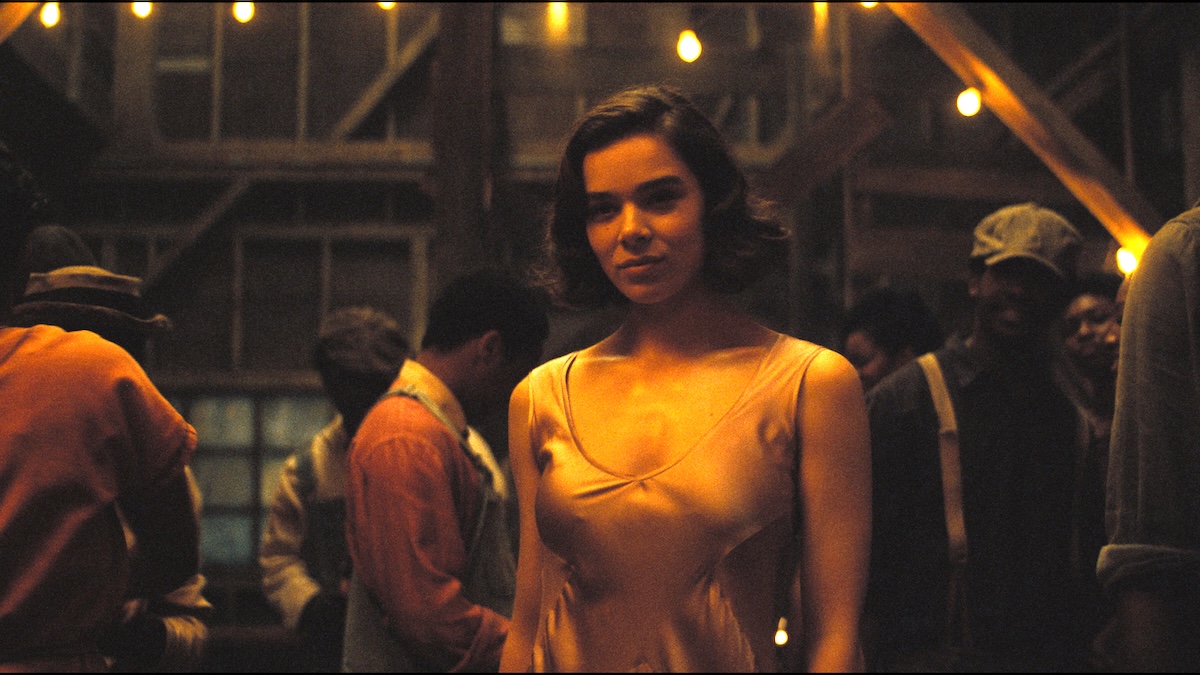
Whenever there is a new kind of film, fans get excited. But what makes Ryan Coogler’s Sinners so exciting is that he somehow managed to make a vampire story feel new and fresh.
Coogler managed to bring music, Hoodoo, race relations, and a fear of what lurks in the dark all thrown into one film. But the allure of his vampires lie in their ability to twist reality and make you question what you really believe. Vampires have always been captivating, it is why we’ve often turned to the same stories over and over again.
Guilty Gear Strive: Dual Rulers is a new anime looking to deepen the world Arc System created with Strive. While GG is a well-loved fighting game series, the anime feels precisely like the narrative moments that pop up between fights. Dual Rulers is just like playing Guilty Gear: Strive. Just with none of the interactivity of playing the game. Let’s get into it.
Dual Rulers has the look down pat. The mixed, clunky steampunk-cyberpunk hybrid aesthetic is on full blast. Characters who look like created players are a part of what makes GG so alluring to begin with. Why does Sin Kiske wear a patch? No idea, but it’s provocative, gets people going, you know? Some very beautifully designed parts of each episode are mixed medium – a 2-D, hand-drawn, textured overlay over some settings that make the world feel more lived-in.

Cel shading and very crisp animation are what makes the Guilty Gear IP stand out (a signature and staple of Arc Systems). The fight scenes are easy to read, but the narrative threads holding the story together don’t have enough weight for anything to feel earned. Dual Rulers suffers from the polar opposite kind of aura farming (intentionally trying to make things look effortless) that Solo Leveling has mastered. Unless you’ve played a slew of Guilty Gear, you might not be able to keep up with what is already a paper-thin storyline. The reverse aura farming shows up in two ways; first, all the damn posing. Everyone strikes a very typical anime-style pose for about a second too long, and it reads as corny. Second is the Ken Burns-type beat sliding ‘introduction’ each character gets when they appear for the first time. In-game, that little bit of movement and drama is kind of cool and edgy. In an anime where there are a whole bunch of characters, the novelty wears off very quickly. For me, it was the middle of the first episode. It takes away from the frenetic pace of things.

Dual Rulers takes place throughout the happenings of Strive. The story unfolds further in the game as more DLC characters pop up, so it was never the drawing point to the game. The anime follows suit as it tries to get audiences to engage with Sin Kiske, having no idea he exists. His design makes him look older than his father (fan fave Ky Kiske) and more like his adopted father (actual fan fave Sol Badguy). Dual Rulers is confusing for anyone who isn’t a die-hard Guilty Gear fan. But for the Guilty Gear initiated, Dual Rulers is a gem that brings all of the characters players have spent countless hours mastering to life in a new way.
Yes, it’s fan service centered but Bast dammit it’s intentional. You have to appreciate that Arc System would go out of their way to fund a full animated production just to please their day-one fans. Dual Rulers is truly and honestly a love letter to a niche group of gamers who are going to lose their minds seeing their fandom in action. Guilty Gear Strive: Dual Rulers airs on Crunchyroll, and the first episode dropped earlier this month. If you’re into nonstop action and dope character design, get more background information and narrative details at their website.
Cover image via Guilty Gear: Dual Ruler Official Website
Want to get Black Nerd Problems updates sent directly to you? Sign up here! Follow us on BlueSky ,Twitter, Facebook, YouTube, Twitch, and Instagram!
The post Such Wonderful Gowns: ‘Guilty Gear Strive: Dual Rulers’ – Review appeared first on Black Nerd Problems.
Sinners is an ancestral masterpiece. Composed with the wisdom of history, the foresight of Black and Brown lineage, and the understanding of our connectedness through cultural excellence. The industry calls Black films ‘risky’ and ‘unpredictable’. Black folks just call that ‘life’. Sinners speaks to that gap in understanding in every way it can.
PRIDE AND JOY
Walking into the theater, you are not fully ready for the feels you are about to have. It isn’t a ‘vibe’, it doesn’t just ‘eat’. Sinners is every bit of generational slang that was and will be. This might sound extreme, but once you see the film, you will understand the transcendent experience that Director Ryan Coogler aims to put you through. And yes, he succeeds. His ability to accurately display the monsters that work beyond lifetimes to acquire the magic we hold. To make audiences truly feel the undeniable draw of our power is a feat only possible with the right amount of vision, resources, and execution.
Ok, ok, let me break all of this down – without spoilers. P.S. Each section will be titled with Buddy Guy song titles because… The Blues.

Photo by Courtesy of Warner Bros. – © Warner Bros.
SKIN DEEP
The film is set in rural Mississippi, following homegrown twins Smoke and Stack. Both characters played very well by the charismatic Michael B. Jordan. Smoke and Stack are returning from a stint in Chicago to their hometown of Clarksdale, Mississippi. It is made very clear that these brothers do not play by any set of rules. They’ve come back to Clarksdale to start their own juke joint on a piece of the sharecropper land they’ve bought with spoils “earned” up north. They’re putting this juke joint together quick and dirty. Gathering up all the folks they know for the spot to pop off that very night.
Right from the beginning, it’s giving a Dusk Till Dawn feel mixed with Nope and Lovecraft Country‘s cultural context. I know… Just mentioning this film in the same sentence as Tarantino makes me cringe. If only we had Coogler first! Now, I am not comparing the two directors – not in the slightest. Coogler is on another plane of existence when it comes to his work. The element of thought and love for his craft goes beyond genre and truly hits you in the bloodstream. I say ‘beyond genre’ because it is no secret that the film holds a supernatural element and can easily be placed in the folk horror column.
FRESH OUT
Now, I was shown the trailer for Sinners just a few times too many before seeing the film. I wanted an element of surprise and felt every time I saw the trailer, I was gaining more and more insight into the story that I wanted to remain mysterious. I can happily say the film does exactly what you think and affects you far beyond what you could have dreamt up from the trailer.
As the twins bring together their community, we are shown the life of the Deep South in 1932. The vast plantation land with the people still working the fields, and the beautiful roots they have sown from a tortured past and present. We’re also given Black joy, Black religion, Black music, Black magic, Black love. The supernatural element feels the most real, the period aspects melt away when you see so clearly the link between past and present. The connection between all things in Sinners… Is the music.
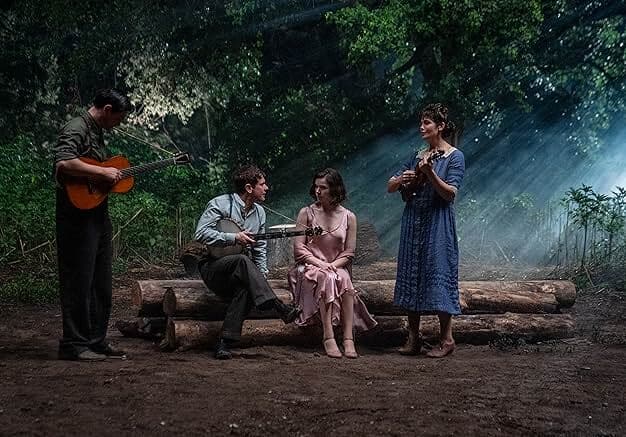
FIRST TIME I MET THE BLUES
The interwoven elements of music in Sinners are the most moving piece of the puzzle yet. The Blues are at the epicenter of evolution and the power to instill life. The character Sammie, aka “Preacher Boy”, played by the incomparable Miles Caton, sings with the velvety resonance of a seasoned Blues traveler. And the man is but twenty years old. This is Caton’s feature film debut, having previously been a touring singer with powerhouse multihyphenate H.E.R. As soon as this young man picks up a guitar and opens his mouth, the hairs on your arm stand up. Your heart feels full, and you thank Bast that they still make voices like his. It’s giving ‘sold my soul at the crossroads’ to sing this well. Sammie is the younger cousin of the twins Smoke and Stack, and an integral piece to the success of their opening night.
Sinners blends the intergenerational music of the Delta Blues with every element of Black music and culture in a way you have always felt but never seen. In an interview with Indiewire, Coogler expressed the desire to make, “…tactile feeling to things people know to be true.” That is exactly what it feels like. The truth. This is only achievable by the brilliant musical genius of Black Panther musical composer Ludwig Goransson. Gorgansson is a longtime friend of Coogler, the composer and producer on Sinners. His creative ear and musical ability are unmatched. Not only do we hear and feel how the Blues are at the root of Black existence, but Coogler and Gorgansson blend Irish folk music seamlessly into the story of our cultures meeting. The way it shows up on film celebrates our real-life differences and also foretells the destruction of human life the narrative is brewing up.
I am working very hard not to spoil this experience for y’all, so let’s get into some of the nitty gritty movie-making elements before I say something I shouldn’t.
MESSIN WITH THE KID
The acting is superb. Every character that graces the screen is fully formed in a short amount of time. Married storeowners Bo and Grace Chow, played by actors Yao and Li Jun Li, jump off the screen with full Mississipian accents. Haggling with our protagonist like they are part of the family. Having this couple in this story is crucial to the accuracy of this time period. Where Chinese migrants were forced to build US railroads alongside Black slaves, and founded towns and blended families. This is a very important part of what makes the essence of this film.
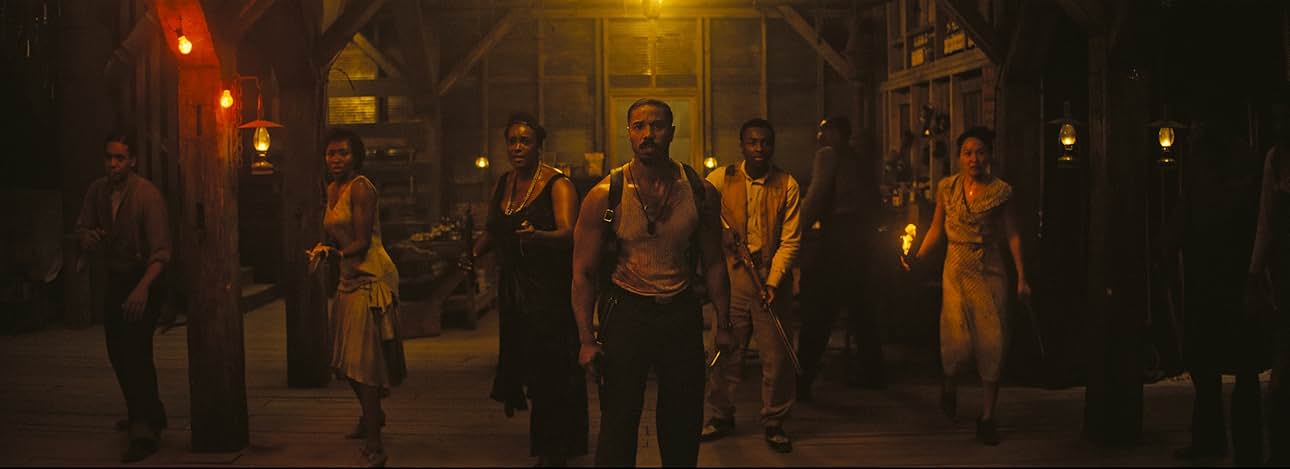
Photo by Courtesy of Warner Bros. – © Warner Bros.
Michael B. Jordan feels like he has finally arrived. Unpopular opinion, I have yet to see Jordan’s acting shine until this film (outside of Fruitvale Station). In Sinners, he has taken on a pair of personas, split between two characters (albeit very similar). It was refreshing to see Jordan go beyond himself and fully dive into the characters. I was able to see past Michael B. Jordan on the screen and still appreciate what he, as himself, brings to a role. Jordan shares the spotlight with some of the greats, as he often does.
Wunmi Mosaku, best known for her role as Ruby in the HBO series Lovecraft Country, plays Annie and is the centering force for the film, doing an expert job as always. The legendary Delroy Lindo, as Delta Slim, chews up every scene, and Jayme Lawson (Shante, Woman King) radiates with our newcomer Miles Caton. Hailee Steinfeld also gives us a new side of herself. I was pleasantly surprised, but also didn’t doubt that she could. Every actor’s dedication to the story is transparent and makes for an immersive and engaging film all the way through. This can only be fostered by the excellent direction and vision of Ryan Coogler.

MY TIME AFTER A WHILE
Which brings me to my final point. Film. It is evident Ryan cannot help but bleed his love for film. The movie was shot on physical film. For anyone out there who doesn’t know filmmaking (forgive the film-splaining if you are), the majority of movies these days are shot digitally. The footage is saved on a drive in the camera, and those files are transferred and edited on a computer. Physical film is a strip of cellulose. It is real, tangible, and very expensive. Not only is it shot on physical film (70mm), it is shot simultaneously in what I did not know they even made – but IMAX film. IMAX is the way of filming and projecting that, in a sense, takes up the watcher’s full field of view. It makes you feel like you’re in the movie. It’s you flying through the air, dancing with the actors… All of it. I had no idea they even made cameras capable of capturing that aspect ratio on film. Okay, I may have gotten very film nerdy for a minute. Watch this very informational video of Coogler explaining it all himself.
Film buff stuff aside, Ryan Coogler wanted grit in the movie. He wanted an all-encompassing element, an immersive experience. This makes the film permeate into your retina and elicit a physical reaction from each moment. People are audibly cheering throughout the movie. I almost cried three times! It isn’t that the film is perfect. It’s that every chord hits the precise place it’s meant to. This is a show of skill in expert proportions. You know every person on set had the time of their lives, and it shows. I’m so proud to love movies because I know creatives like this exist.
STAY AROUND A LITTLE LONGER
Now this is where I plan to insert spoilers. If you’ve seen the film, keep reading. If not, please return after you’ve gone all the way through the post-credit scene.
As a practitioner of Afro-Puerto Rican folkloric dance Bomba, a singer and lover of R&B, and a devotee of Hip-Hop’s origins, there is one scene in the film that had me in tears and feeling like all my ancestors were present beside me. During this memorable opening night of the juke joint, Sammie, aka Preacher Boy, starts to sing. As he strums his guitar and belts each note, the roof opens up. The house literally burns down as every part of African, Black, and Chinese American culture materializes in the space. The moment expresses so clearly how Blues is at the crux of our ancestral roots. Straight from Sammie’s guitar comes Jazz, Hip-Hop, Trap, and then to West African drumming. All of this while the crip walk, breaking, ballet and twerking is going on all in one room. Meanwhile, dice is being played as the DJ spins, and every brown body is vibrating with joy and elation. It is an undeniably powerful scene. As the song continues, we see just beyond the perimeter of the burnt down walls three white figures drawn to the magnanimous energy like mosquitoes to a vein. Their eyes aglow. Like, dang we can’t have nothing to ourselves?!?

SNATCH IT BACK AND HOLD IT
For the monsters in the film to be vampires, you think, would feel a little too on the nose. The nuance built into the villainous antagonists makes it only feel right. The added elements of the vampires being a hive mind (which is seldom used in their lore) bring home the very clear narrative of a shared experience, and the desire to collect the story of Sammie is even more impactful. The Blues hold the key to a very powerful set of ancestral connections that our main villain just has to have. This particular vampire, Remmick, played by Jack O’Connell, is quite old and of Irish descent. Irish cultural history, being so closely tied with oppression, slavery, and resistance, was a brilliant choice of Coogler. A story that feels congruent but still aims to possess our narratives and depth of power.
There are so many elements of this film that this review could fill three books. Wunmi’s character Annie brings in ancient and sacred rituals of the spirit, like hoodoo. These spells and knowledge are meant to protect and honor our spirituality.
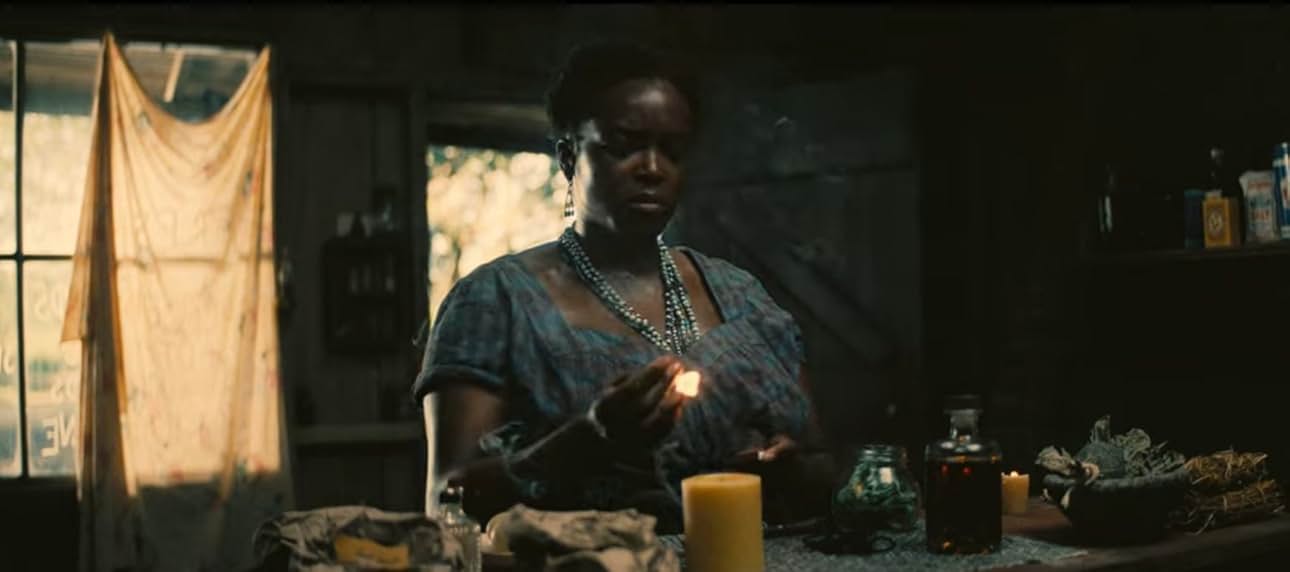
The Native and Indigenous riders pursue the villain at the beginning and work to protect the land and people from their evil. I very much hope there is a spin-off following those characters and their journey.
I feel so deeply seen. So proud to be a filmmaker, an actor, a singer, a keeper of ancient traditions, a storyteller. In a time when we are told our stories are unworthy, I’ve never been more motivated to be louder and take up more space. Even if only to honor where all the power comes from.
Want to get Black Nerd Problems updates sent directly to you? Sign up here! Follow us on BlueSky, Twitter, Facebook, YouTube, Twitch, and Instagram!
The post Review: ‘Sinners’ Takes Us to Church appeared first on Black Nerd Problems.