
Femme, Gifted, and Black: ‘Ironheart’ Review
https://blacknerdproblems.com/femme-gifted-and-black-ironheart-review/
Let Me Be Great
With no other fanfare, Marvel Studios’ Ironheart is good. Argue with your local incel, because there ain’t no debates here. Creator and showrunner Chinaka Hodge Took. Us. Back. The gritty science fiction moving in lockstep with the fantasy of magic reminded us of why we believed in comic book media in the first place. Will the cultural and critical success of Ironheart be enough to drown out the rising tide of xenophobia? Will Marvel let this IP be great? Let’s get into it.
The Exaggerated Swagger of a Black Genius
Dominique Thorne is Riri Williams. There’s no way to come back from it; the genie’s out of the lamp. Thorne is lightning in a bottle in Ironheart—ferocity and passion in equal parts, brilliance, and the ego to flex it on full display. We’ve had almost twenty years of the MCU to dissect the complexity of Tony Stark’s personality. So, what we got from Riri in Wakanda Forever felt like an afterthought, as if she were shoehorned into the film after a slew of decisions were made (respectfully, after Chadwick Boseman’s passing shifted the film’s direction). That is NOT what we get viewing Ironheart. Homegirl is so fully fleshed out and well-conceived. Every detail. From production design and costuming, down to the microexpressions Thorne uses to convey to viewers what Riri doesn’t say aloud.
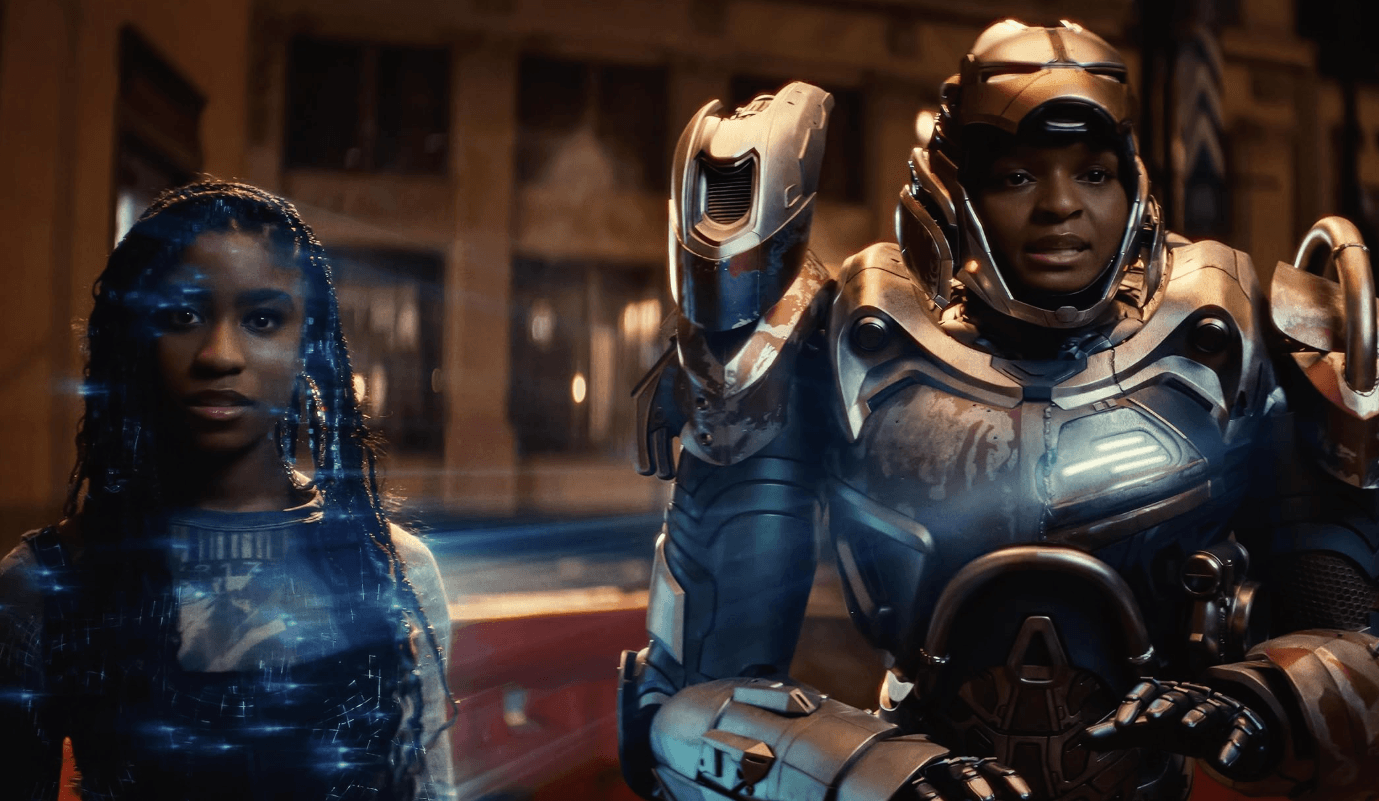
Shoutout to Brooklyn, New York City! Dominique Thorne is really her in these Marvel Chicago streets. Brian Michael Bendis created the character (he also created Miles Morales/Spider-Man) as a rebel looking for a cause. Under Eve Ewing and Vita Ayala’s writing, Riri Williams takes on a rarely focused on identity; that of Black women gearheads. Often, women engineers and tinkerers are pigeonholeed as ‘Tomboys’. Thorne turns that idea on its head by delivering a vulnerable performance of someone doing their best to hide their soft spots from everyone at all times. You know who Riri is, but not really. So when her mom asks, ‘Do you have a boy in here? A girl?’ You get the feeling that it could be either, because Riri keeps a wall up so consistently, you don’t even know who she’d be attracted to. Riri defies convention and categorization. For Thorne to play this character this way implies she had to be very intentional with her acting choices. Elite performance work.
What Hodge wrote into Riri is someone so obsessed with the nuts, bolts, shape, and color of things that nothing else matters. That is the parallel to Tony Stark that makes up the core of Riri Williams’ identity. What is stellar beyond explanation is how Dominique Thorne performs Riri’s drive and ambition on camera. It’s honestly a one-to-one translation of what made 2008’s Iron Man so great. Tony obsesses over tech and evolves to escape his father’s shadow. Riri obsesses over tech and evolves to escape her neighborhood (then escapes MIT and Wakanda). I say all of this to bring home the fact that Riri Williams is not an easy character to play, and Thorne deserves all the flowers for pulling it off.
Chinaka Hodge is the ‘Why’
Ironheart is a dope show. The authenticity hits at levels Doctor Strange would cite as ‘hitherto undreamt of’. A series with the capacity to isolate and expound upon the intersections of every character is rare, period. Even more rare at the Disney/Marvel ‘giant media conglomerate’ level of production. But it gets it done. How does an IP for a legacy hero to a previously C-list hero get this good of a show? Chinaka Hodge is the answer. Hodge poured five years of pen work into crafting this series. If you know Chinaka Hodge, then you know her pen goes crazy in any medium. Every good thing about the Ironheart series has to come back to this brilliant, Black woman who then developed a world filled with brilliant, Black women.

Now that her name is household in a new way, Chinaka Hodge has made sure to pay the attention and opportunity forward. If you are keyed into their social media, Hodge has made it a point to highlight every single woman who has contributed to the success of Ironheart. From her babysitter to her assistants, past professors, fellow peer poets, and whoever else she can bring in. And it’s a thing of joy and integrity to see, and you can read that integrity and cultural competency throughout the series.
Black Lady Comic Book Show
I was in the midst of the third episode when I realized there were so many more femmes in the cast than cis men. A wave of realization washed over me, and I wanted to stand up in my living room and clap when it happened. I was just watching the show and had a whole slow-motion look around the room (only my wife and our puppies were present) like Wee Bey from The Wire. I jumped up and danced for about five seconds and chanted, “Black lady courtroom!” Couldn’t even help it. Ironheart is quite literally about Black women in the Marvel Cinematic Universe, and it’s the love letter to those women I didn’t know I’d ever get. Proximity Media (Ryan and Zinzi Coogler’s production company) has always made it a point to make sure women are in pivotal positions in the creative process of a production. Ironheart is no exception.

Fellowship is the Thing
Y’all, this cast is solid vibranium. A world like this can’t be fleshed out without fully developed characters to occupy it. The depth of Ironheart comes from how deep the bench is. Lyric Ross better get some award space in her home because her performance as the artificial intelligence N.A.T.A.L.I.E. exceeded my expectations (and my expectations were high AF). Anji White plays the hell out of Riri’s mother, Ronnie, and it’s no surprise. White is a proven stage and screen actor and channels every Black mother ever with her performance here. She made several of my mother’s faces, and I was sold. Shea Couleé is a RuPaul’s Drag Race alum several times over and always shows up with their best. Their turn as the tech henchman, Slug, was iconic. It takes a real superstar to turn a few scenes into a moment, and they deliver! The legendary voice gawd Cree Summer pops out, and you know she has the gallon hat in her contract. Not many actors can do what she does, and you can’t name what she does, but you know the feeling when she does it. Her turn as Riri’s mother’s bestie, Madeline, is quirky and fun.

Plus, she opens the door for another of the show’s breakout performances from Madeline’s daughter, Zelma Stanton. Regan Aliyah enters the MCU as a low-key but high-powered magic user that comic readers will know from Strange Academy and TV watchers will adore. What people may not know is that Anthony Ramos is a very powerful actor (another Brooklyn shoutout!). He’s the edgy wisdom of Nuyorican artists, the suave of Benjamin Bratt, the polarized range of John Leguizamo. But a writer would have to know how to write for those facets. It’s hard to make Ramos scary; he’s so charming, but Hodge uses that charm to allow Ramos to be as scary as he’s ever been. Hat’s off.
Finding the Sweet Spot
No MCU-related piece is complete without synergy from the comics. Although it goes the other way around quite a bit. But goodness gracious, there’s a profound mix of the media going on here. Ironheart, the character, has only existed since 2016, so all we’ve had to go on are Ewing’s and Ayaya’s run of comics. So much of Riri’s existence has been in tie-ins and crossovers that left lots of room for Hodge and company to use this show to stretch Riri’s legs, so to speak.
Ezekiel Stane’s involvement in Ironheart is a master stroke. Alden Ehrenreich gives a great turn of the goofy and intentional. In the comics, he’s a dark refraction of Tony Stark, and here he’s a dark reflection of Riri Williams (clock the difference). Perfect use of the character, who in the comics scoops up old Stark tech and utilizes bioengineering and cybernetics know-how to ‘improve’ on humanity by testing it on himself. Zeke getting the implants in the series sets him up to be a minor player in the upcoming Doomsday or Secret Wars, or a major one in the production limbo-stricken Armor Wars.
One of the more important and brilliant aspects of Marvel’s comic universe is its scale. The gigantic cosmic events of Guardians of the Galaxy, The Fantastic Four, and Avengers are fortified by the slice-of-life ‘street-level’ characters. On that smaller scale, you find fan faves like Daredevil, Luke Cage, and Punisher. Even smaller than that, you find Ironheart big bad, The Hood. Parker Robbins blends the smallest scale of Marvel, its criminal element, with one of the largest, its magic element. The Hood is a character who elevates an arc by blending scales and taking a hero to a new place. Well used in this series to move Riri out of her typical rogues gallery and into some wild places.
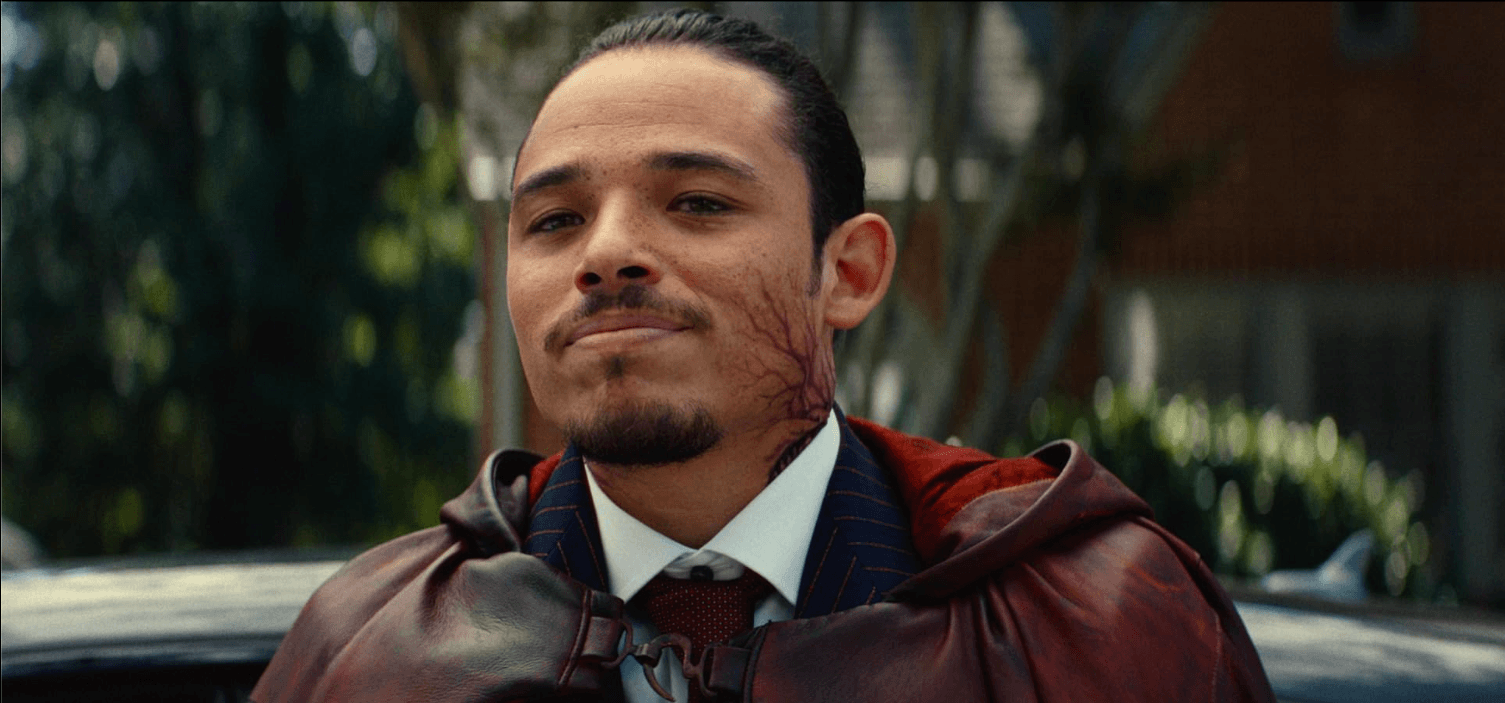
Bringing Mephisto is wild on a few levels. First, there is a well-travelled relationship between him and The Hood in the comics. Mephisto plays with reality in a fun, Faustian way that allows readers and viewers guessing what might happen. That kind of unpredictability is exactly what the MCU needs to keep things feeling fantastical. Now, Marvel enlisting a brilliant performer to play such an over-the-top character makes sense. But for it to be Sacha Baron Cohen, a very loud and proud supporter of Israel, took me aback, and the character’s inclusion made the ending feel different. Filming on Ironheart wrapped in late 2022, a year before the current genocide of Palestinians by Israel. So, there is grace for the production team, but I would be remiss if I didn’t say Cohen’s performance as Mephisto felt aligned and timely, given the state of the world.
Be mad, Stay mad.
So, in short, Ironheart is a dope series. But since it’s Black woman-led, in front of and behind the camera, the show has already caught hell from all sides. Before it even dropped, it was review-bombed and YouTubed to death. Captain Marvel, The Marvels, Black Panther, and Wakanda Forever were all plotted against. At some point, Marvel has to step in and say what needs to be said about the racist, sexist, and xenophobic members of its fandom. Or shows like this one have to fight for the greatness it was always capable of. Ironheart is a good series, will Marvel shield it from harm, and allow it to have a legacy? Will every femme hero have to suffer the way Kelly Marie Tran and Moses Ingram did?

I am immediately swept back to Brie Larson’s 2018 Crystal Award acceptance speech. Where, after breaking down the stats on demographics of film and TV critics, she says plainly, “…If you make a movie that is a love letter to women of color, there is an insanely low chance a woman of color will see your movie and review your movie.” That means studios need to imagine the dignity of their audiences, their reviewers, protect their talent, and in the long run, protect their projects. In the meantime, haters with no merit can stay mad. It won’t stop the brilliance of creators like Chinaka Hodge or projects like Ironheart. Not in the ways that matter most.
Go on ahead and check out Ironheart on Disney+ and run them numbers up so we can see more of this part of the Marvel Cinematic Universe.
Want to get Black Nerd Problems updates sent directly to you? Sign up here! Follow us on BlueSky ,Twitter, Facebook, YouTube, Twitch, and Instagram!
The post Femme, Gifted, and Black: ‘Ironheart’ Review appeared first on Black Nerd Problems.