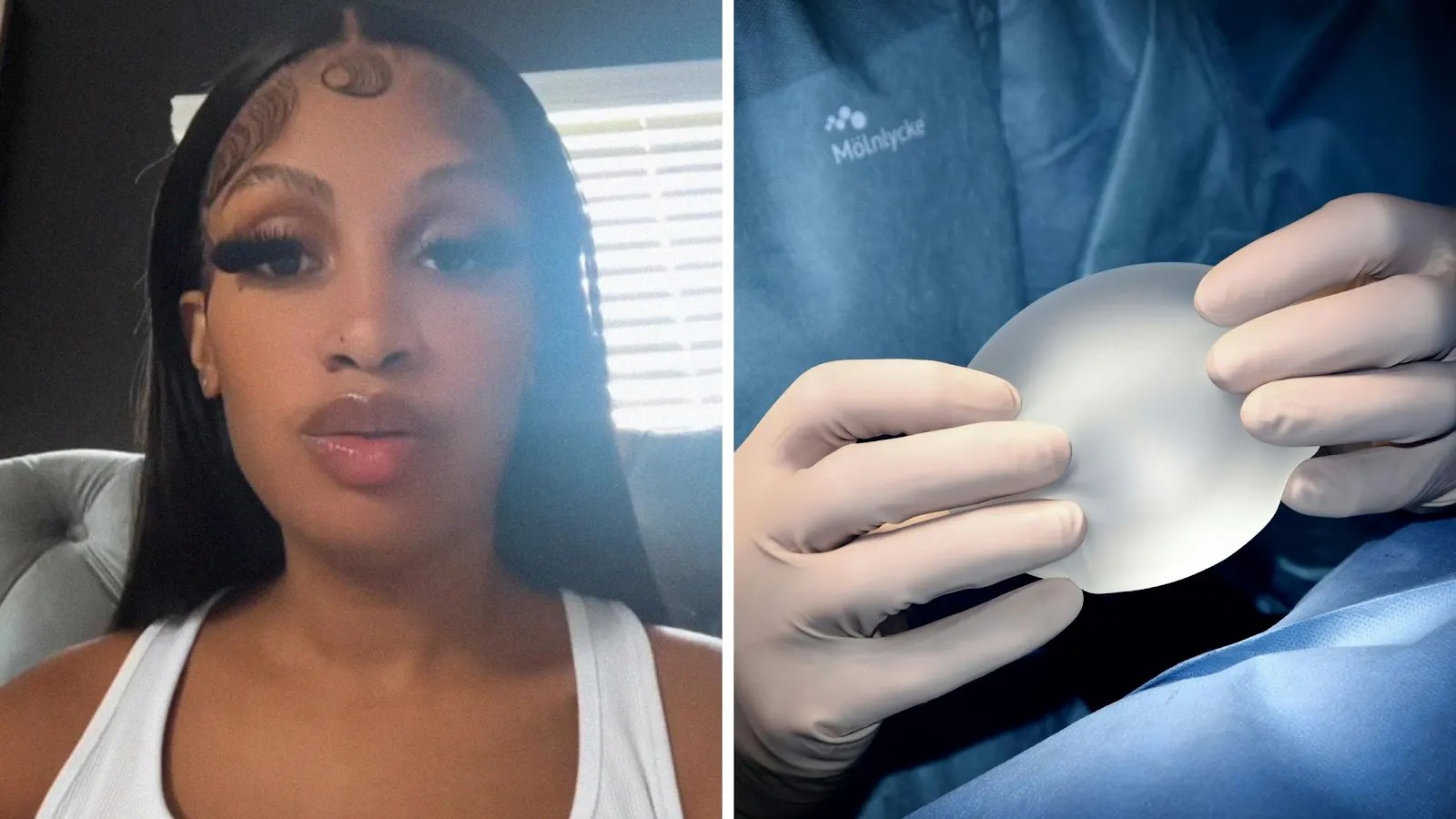
A Miami, Florida, woman decides to get “gummy bear” breast implants in 2021. However, she discovers that her surgery didn’t go as agreed after she gets into a car accident.
In a video with over 288,000 views, TikToker Sanadamarie (@sanadamarie) explains that she became determined to get her breasts done in 2021. She says she wanted them smaller and more lifted, but liked the look of implants.
A Miami, Florida, woman decides to get “gummy bear” breast implants in 2021. However, she discovers that her surgery didn’t go as agreed after she gets into a car accident.
In a video with over 288,000 views, TikToker Sanadamarie (@sanadamarie) explains that she became determined to get her breasts done in 2021. She says she wanted them smaller and more lifted, but liked the look of implants.
The original Batman television series from 1966, campy as it was, helped make the character a cultural icon. Before Batman ’66, DC Comics was considering canceling Detective Comics. Then suddenly, the Caped Crusader’s titles were selling millions, all because the TV show made Batman a household name. And although other Batman actors have come and gone in live-action, Adam West and Burt Ward remain iconic. Now, according toThe Hollywood Reporter, several costumes from the show, including those worn by the Dynamic Duo, as well as Batgirl, Joker, Penguin, and Catwoman, fetched nearly a million dollars. The massive final tally for the entire Batman collection earned $989,500.Warner Bros. Television
This sale was part of Heritage Auctions’ sale of collector Dr. Stewart Berkowitz, known as the Stewart Berkowitz Television Treasures Auction. This early eBay adopter passed away in 2024, leaving a massive collection behind. And there were many other iconic costumes in this auction, including a few that many of you reading this would definitely nerd out over owning. One of Lynda Carter’s screen-worn costumes from Wonder Woman, complete with a magic lasso, sold for $225,000. In addition, two of William Shatner’s Captain Kirk costumes from the original Star Trek sold. These were his standard Starfleet uniform and his evil “Mirror, Mirror” Kirk costume, which sold for $62,500 and $52,500, respectively.
Warner Bros. Television/Paramount Television
The original owner of these items was clearly a huge fan of the sixties and seventies television of his youth. Aside from Batman and Star Trek, shows like I Dream of Jeanie, The Munsters, and Happy Days had costumes that were part of this auction. Heritage Auctions executive VP Joe Maddalena said in a statement, “This auction was a love letter to the Golden Age of television. Stewart Berkowitz built this collection out of pure passion for the shows and characters that defined an era.” We hope their new caretakers take as good care of these artifacts of 20th-century popular culture as their original owner.
National American Beer Day, observed on Oct. 27, recognizes the tradition of Black beer brewed in the United States. This year, our focus shifts to the unmistakable impact of Black‑led breweries. Although Black‑owned craft breweries make up less than 1% of all U.S. operations, Black brewers are reshaping the conversation, creating standout brews, safeguarding heritage, and championing equity within an industry that rests on community and craftsmanship. BLACK ENTERPRISE celebrates that excellence by delivering a glimpse of the innovators, brands, and movements that are brewing culture and catalyzing change throughout the brewed beer industry and landscape.
Harlem Brewing Company
Harlem Brewing Company opened its doors in November 2000, under the leadership of Celeste Beatty, an entrepreneur and brewer who became the first Black woman to own a brewery in the United States. The brand crafts beers that reverberate with Harlem’s history. Each pour contributes to the neighborhood’s cultural narrative. Though its headquarters are firmly planted in Harlem, the operation has pushed southward, launching Harlem Brew South in North Carolina. At its heart, the company seeks to redress the under‑representation of Black owners in the craft‑beer arena.
Cajun Fire Brewing Company
Cajun Fire Brewing Company (New Orleans) burst onto the scene thanks to brewmaster‑CEO Jon Renthrope, a Black and Native American entrepreneur determined to put the South in the driver’s seat of its craft‑beer destiny. Their Honey Ale, along with a suite of signature concoctions, marries deep‑rooted flavor with the daring inventiveness of modern brewcraft, delivering both a palate‑pleasing sip and a purpose‑filled pour. Though the taproom sits in the heart of New Orleans, the brand’s reach extends beyond the Crescent City, earning Cajun Fire a spot as a pioneer on the national craft‑beer map. In filling a glaring representation void, the company also pumps life back into Eastern NOLA, uplifting the neighborhood’s community spirit and economic pulse.
Hippin’ Hops, the brick‑and‑mortar brewery and taproom that set up shop in Atlanta, serves up hallmark pours, like the assertively hop‑forward “Baby Mama Drama” IPA and the tart, summer‑ready “So Peachy” sour, each alongside a full‑scale restaurant menu that feels more like a dining experience than a bar snack. The space pulses with a neighborhood‑driven vibe, earning its reputation as a cornerstone of Atlanta’s Black craft‑beer scene. Hippin’ Hops crafts a communal, rich gathering place around craft beer. It’s an oasis that’s often absent from the more generic mainstream beer landscape.
Urban Garden Brewing Co., a venture born in 2021 in Washington, D.C., out of a vision of Eamoni, is on a mission to plant a full‑scale, Black‑owned brewery into the capital’s thriving beer scene. For the moment, Urban Garden Brewing Co. is producing small‑batch craft ales under contract, all the while laying the groundwork for its brick‑and‑mortar brewing hub.
Moor’s Brewing Company
Moor’s Brewing Company in Chicago was founded by three friends, Damon Patton, Jamhal Johnson, and Anthony Bell, right on the South Side of Chicago. The brewing company already ships its craft beer to more than 500 locations, and the owners are eyeing a 2025 opening of a Black‑owned taproom in the city. Launched on Juneteenth in 2021, Moor’s stands as a testament to ambition and cultural representation in the U.S.
Brown Girl’s Brew operates out of New York and Chicago and was founded by Christina Thomas, a woman who links craft beer, dessert‑inspired flavors, and Black female entrepreneurship in a space where women of color remain scarce. The brews read like a dessert menu, featuring Carrot Cake Amber Ale, Lemon Pound Cake Lager, and Banana Pudding Hefeweizen. It is already making its way through New York, New Jersey, and beyond.
Rhythm Brewing Co., located in the heart of New Haven, Connecticut, is the brainchild of Alisa Bowens‑Mercado, Connecticut’s brewery proprietor. She blends a music‑driven environment, dubbed “The Rhythm Nation,” with the timeless craft of brewing, turning each glass into a kind of jam session. Since its 2018 launch, Bowens‑Mercado’s story highlights the hurdles of race and gender that still loom over the craft‑beer world. Bowens‑Mercado also underscores how a sharp, niche‑focused brand can serve as a foothold for Black‑owned brewing ventures.
Fresno, California’s Full Circle Brewing Co., proudly holds the title of the Central Valley’s brewery. It functions both as a full‑scale production craft brewery and as a vibrant live‑entertainment venue. The operation has shone a spotlight on brewing entrepreneurship and breaking into emerging markets and craft‑beer regions that aren’t traditionally on the map, while keeping live events and community engagement at the forefront.
Vine Street Brewing Co. is based in Kansas City, Missouri and proudly bears the distinction of being the state’s brewery. Its relaxed, welcoming taproom offers a lineup of beers. Since opening its doors in 2023, Vine Street Brewing Co. has quietly underscored how the craft‑beer equity movement is finally taking hold in the Midwest, reminding its consumers and peers that diverse ownership matters, especially in markets that often slip under the radar.
Biopics are, currently, a dime a dozen so when one stands out from the pack, it tends to make a lasting impression. While the new movie Christy didn’t reinvent the genre, it does find its own path in telling the tragic story of Christy Martin (Sydney Sweeney).
Christy is a famous boxer but her story is known because of the actions of her old manager and ex-husband, Jim Martin (Ben Foster). Throughout the film, we get to see Christy struggling with her identity. The real Christy is married now to Lisa Holewyne (Katy O’Brian) and David Michôd, along with co-writer Mirrah Foulkes, does a great job of weaving in Christy’s struggle with her sexuality in with the control that Jim and her parents had on her life.