
deerstalker
https://www.essence.com/news/los-angeles-wildfires-2025/
 Photo by Hans Gutknecht/MediaNews Group/ Los Angeles Daily News via Getty Images
A fast-moving wildfire has forced over 30,000 residents to evacuate the Pacific Palisades area of Los Angeles due to “life-threatening and destructive” winds that are rapidly spreading the flames.
The fire broke out on Tuesday morning. By 10:10 a.m. local time. In just a few hours, the fire expanded even further and the fire had burned over 1,200 acres, according to the California Department of Forestry and Fire Protection (CalFire)
Critical Fire Weather Alert:Southern California is facing a #CriticalFireWeather event through Thursday, with strong Santa Ana winds and low humidity creating extreme wildfire risks. One fire, the #PalisadesFire, has already ignited and is being driven by these high winds. 
 … pic.twitter.com/LnUrJiDkWG
— CAL FIRE (@CAL_FIRE) January 7, 2025
More than 10,000 households and over 13,000 structures are at risk from the blaze, according to Kristin Crowley, fire chief of the LA Fire Department as reported by The Associated Press.
California Governor Gavin Newsom confirmed that many structures have already been destroyed, although no official number has yet been provided by officials. He also warned that the danger is not over, urging residents across Southern California to remain vigilant. Newsom noted that the worst of the winds is expected to hit between 10 p.m. Tuesday and 5 a.m. Wednesday.
The combination of dry conditions and powerful winds has fueled the fire, and these winds are predicted to strengthen overnight, with gusts up to 100 mph in some of the windiest areas. The windstorm could last for several days and roughly half a million utility customers are at risk of power outages.
This is a developing story. ESSENCE will provide updates as more information becomes available.
TOPICS: Los Angeles Wildfires
The post Los Angeles Wildfires Force 30,000 To Evacuate As Winds Fuel Flames, State Of Emergency Declared appeared first on Essence.
Photo by Hans Gutknecht/MediaNews Group/ Los Angeles Daily News via Getty Images
A fast-moving wildfire has forced over 30,000 residents to evacuate the Pacific Palisades area of Los Angeles due to “life-threatening and destructive” winds that are rapidly spreading the flames.
The fire broke out on Tuesday morning. By 10:10 a.m. local time. In just a few hours, the fire expanded even further and the fire had burned over 1,200 acres, according to the California Department of Forestry and Fire Protection (CalFire)
Critical Fire Weather Alert:Southern California is facing a #CriticalFireWeather event through Thursday, with strong Santa Ana winds and low humidity creating extreme wildfire risks. One fire, the #PalisadesFire, has already ignited and is being driven by these high winds. … pic.twitter.com/LnUrJiDkWG
More than 10,000 households and over 13,000 structures are at risk from the blaze, according to Kristin Crowley, fire chief of the LA Fire Department as reported by The Associated Press.
California Governor Gavin Newsom confirmed that many structures have already been destroyed, although no official number has yet been provided by officials. He also warned that the danger is not over, urging residents across Southern California to remain vigilant. Newsom noted that the worst of the winds is expected to hit between 10 p.m. Tuesday and 5 a.m. Wednesday.
The combination of dry conditions and powerful winds has fueled the fire, and these winds are predicted to strengthen overnight, with gusts up to 100 mph in some of the windiest areas. The windstorm could last for several days and roughly half a million utility customers are at risk of power outages.
This is a developing story. ESSENCE will provide updates as more information becomes available.
TOPICS: Los Angeles WildfiresThe post Los Angeles Wildfires Force 30,000 To Evacuate As Winds Fuel Flames, State Of Emergency Declared appeared first on Essence.
 Photo courtesy of BET+
Drama fans, mark your calendars for the highly anticipated spin-off series The Family Business: New Orleans will premiere on January 23, 2025, with a double-episode debut exclusively on BET+. Following the premiere, one episode will drop weekly, leading up to the thrilling finale on Thursday, March 6.
Set against the backdrop of New Orleans’ vibrant yet dangerous streets, the series introduces a new branch of the Duncan family tree. Known for their iconic nightclub, The Midnight Blues, the family finds themselves caught in a web of corruption, turf wars, and crime bosses threatening their legacy. When the stakes become too high, they call on their New York family for backup, promising viewers a familiarsrc="https://www.essence.com/wp-content/uploads/2025/01/FBNolaFamBody.jpg" alt="‘The Family Business: New Orleans’ Brings Big Drama To The Big Easy" width="400" height="259" />Yvette Nicole Brown, David Banner, and Lela Rochon in “The Family Business: New Orleans.” Photo courtesy of BET+
The star-studded cast includes Brandon T. Jackson as Marquis, the dashing son of Big Shirley Duncan (Lela Rochon), who runs The Midnight Blues. Pooch Hall portrays Floyd, Big Shirley’s stylish and protective brother, while Benjamin Stephens takes on Curtis, a bounty hunter drawn into a conflict far more dangerous than expected. Quincy Brown, David Banner, Yvette Nicole Brown, and Orlando Jones round out the ensemble, each adding intrigue, romance, and drama to the mix.
With Carl Weber and Nikaya D. Brown Jones as executive producers and Trey Haley directing, The Family Business: New Orleans promises high-stakes drama, intense family dynamics, and a city as colorful as the characters who inhabit it. Don’t miss this riveting addition to the Family Business universe.
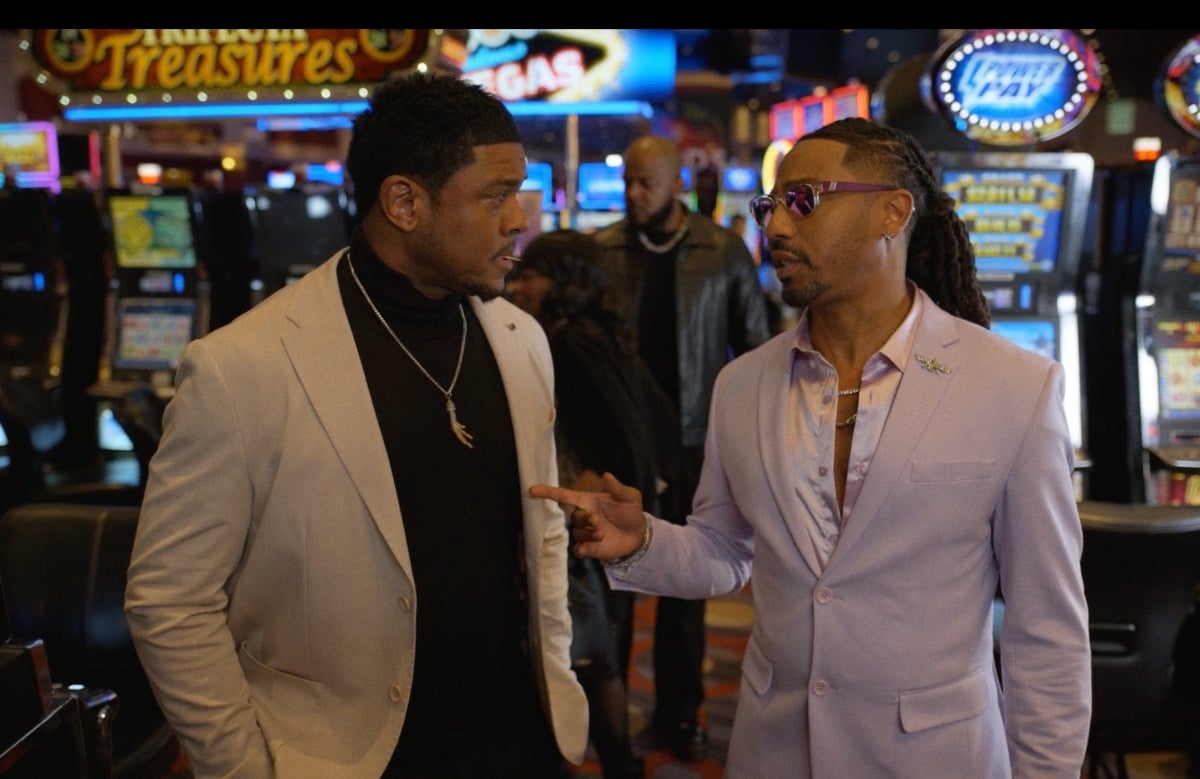 Pooch Hall and Brandon T. Jackson in “The Family Business: New Orleans.” Photo courtesy of BET+TOPICS: BET+ lela rochon
The post ‘The Family Business: New Orleans’ Brings Big Drama To The Big Easy appeared first on Essence.
After graduating from high school, Natsuko Hirose starts her career as an animator. Her talent quickly flourishes, and she makes her debut as a director in no time. Her first anime becomes a massive hit, sparking a social phenomenon and earning her recognition as an up-and-coming genius director.
Her next project is set to be a romantic comedy movie themed around first love! However, having never been in love herself, Natsuko struggles to understand the concept of first love, and as a result, she’s unable to create the storyboard, causing the movie production to come to a standstill. One day, she passes out while working on her storyboard and wakes up in the world of her favorite childhood anime movie “A Tale of Perishing.”
This is a mostly spoiler-free review of ZENSHU. The first episode debuted Sunday, January 5, 2025 on Crunchyroll.
A big thanks to Crunchyroll for the early access!
When Crunchyroll unleashed a wave of new trailers last month, there was one that a friend sent my way, fellow BNP writer and anime fan Mikkel, that spoke to me–that reaaaallly spoke to me. The trailer that I saw was flashy, brilliant, and followed an anime fan…achieving her dream and the fantastical events that followed. The story follows an up-and-coming genius young anime director and the fantasy world she gets sucked into. This was the third official trailer, vastly different in the first two previously released and truly it was the trailer that cemented my interest in watching. I love a good Isekai and/or transmigrated or reincarnated character into a fantasy world and that’s what we’re getting here with MAPPA’s new original anime series–with a twist.
“FIRST STROKE”
The first five or six minutes or so of his very first episode of ZENSHU really set the scene in introducing our protagonist Natsuko Hirose. She’s a highly talented animator, whose talents carried her up the ranks in the animation industry to where she is now, a whole director. Within the first few minutes the audiences are treated to her personality: she’s a workaholic but unwilling to accept help or work with her team. The studio is behind on this latest feature film, a coming-of-age film featuring romance, but Natsuko is behind on the storyboards. We get to see her experiencing so much with such a short time: possible burn-out, the shock and grief of learning bad news, and writer’s, her animator’s block that is keeping her from being great.

It is not lost on me MAPPA is showing such characters working in the animation industry in distress feels incredibly on the nose. I say this because despite the incredible powerhouse the studio has proved itself to be in recent years, the studio has not avoided criticism regarding the controversies about its brutal work environment which include overworked employees, tight schedules, and the like. While we are not in Natsuko’s animator’s chair for long, I could not help but wonder if the narrative will return to the woes that animators and those in the industry face (or perhaps the particular ones that Natsuko suffers from) later in the series with more depth?
ZENSHU is equally thrilling to look upon and also intriguing to watch. I wasn’t quite sure what to expect with this original anime series and this first outing proved to be an amusing and colorful ride into MAPPA’s new era. I did find that the episode was so much fun to watch with comedic spots to move along the pacing to the more serious animated sequences of the episode. Fun fact: The original screenplay for this series was created by Kimiko Ueno, who wrote the anime adaptations for Delicious in Dungeon and 2024’s Ranma ½.
I love learning that fact that those series are known to fans as anime with much humor, drama and flair which ZENSHU is showing us glimpses of so far. Natsuko’s emergence in this world of one of her childhood favorite animated worlds is worth dipping into as it is a fleshed-out world with lots of fine details and creatures. I’d want viewers to tune in also for the dynamic growing between her and Luke and crew–the heroes in a doomed world that she knows so intimately. I’m here for world building–as I am in any fantasy setting–yet I am also here for seeing Natsuko take off the rose colored, I mean nostalgia-colored glasses from her youth and confront what is in front of her.

ZENSHU ain’t got no reason to look this damn good via its animation. Seriously, from the battle sequences to the rapid fire back and forth moments that the female animator has with others, particularly the heroes in the “A Tale of Perishing”–the episode had many moments that shined. The later half of the episode features big battle scenes along with a brilliant realization of one’s power that carries the rest of the remaining runtime with ease. I wasn’t expecting MAPPA to drop the ball here with the animation. I was more so curious if their usual high level, quality of animation would be enough to hold those who aren’t quite sold on the new series. Especially since it is an original anime and not adapted from an uber popular manga that fans have been salivating over.
“We can always use more fantasy and this first episode of ZENSHU brings an ordinary young woman in a fantastical tale, on her own brilliant journey to become the hero she never knew she needed to be. MAPPA’s newest era brings us an engaging, humorous expedition into an original work that looks to bring a lot of heart and potential.”
Verdict
Natsuko is an unlikely hero–one of my favorites in anime–thrust into a world she knows so well. We can always use more fantasy and this first episode of ZENSHU brings an ordinary young woman in a fantastical tale, on her own brilliant journey to become the hero she never knew she needed to be. MAPPA’s newest era brings us an engaging, humorous expedition into an original work that looks to bring a lot of heart and potential. I can’t help but wonder if a two-episode premiere was needed to further bring along those on the fence about watching. (I suppose the alternative question to ask is what anime fan is NOT going to tune in for a MAPPA production?)
I obviously enjoyed watching ZENSHU: I do like what I’ve seen so far and where MAPPA is going with this original series. I am loving the visuals, the energy, and the combined elements that the audience sees only a taste in this first episode. I am curious to see whether the narrative threads about an animator changing the story, changing the game, bringing new agency into her life holds up in future episodes–and in real life. ZENSHU checks off a bunch of boxes for me, as it should for other viewers in this new year and new season of anime. Time will tell if this new original series has the spine to stand tall and succeed in an already stacked anime season or will it end up being a series that needs to go back to the storyboards to be great?
ZENSHU
Premiering on Crunchyroll
January 5, 2025
– PRODUCTION STAFF –
Directed by
Mitsue Yamazaki
Script Written by
Kimiko Ueno
Character Design and World Setting by
Yoshiteru Tsujino
Character Design and Chief Animation Director
Kayoko Ishikawa
Chief Animation Director
Etsuko Sumimoto
Kazuko Hayakawa
Shuji Takahara
Assistant Director
Sumie Noro
Art Director
Akio Shimada
Color Design by
Ayako Suenaga
Director of Photography
Kenta Fujita
Editor
Mutsumi Takemiya
Music Composed by
Yukari Hashimoto
Sound Production
dugout
Casting Manager
Makoto Tanimura (Sound Wing)
Animation Producer
Takahiro Ogawa
Animation Production by
MAPPA
– SONGS –
Opening Theme Song “Zen” Performed by
BAND-MAID
Ending Theme Song “Rest in peace.” Performed by
Sou
– JAPANESE VOICE CAST –
Anna Nagase as Natsuko Hirose
Kazuki Ura as Luke Braveheart
Rie Kugimiya as Unio
Minori Suzuki as Memmeln
Akio Suyama as QJ
Romi Park as Justice
Manaka Iwami as Destiny Heartwarming
Kentaro Tone as Chingosman
Masashi Yamane as Ganger
Katsuhisa Hoki as Capitan
Sayaka Ohara as Admiral
About Crunchyroll
Crunchyroll is the global anime brand that fuels fans’ love of anime. With the ambition to make anime an even bigger part of pop culture, Crunchyroll offers fans the ultimate anime experience and destination centered around a premium streaming service. Crunchyroll has the largest dedicated anime library, an immersive world of events, exciting theatrical releases, unique games, must-have merchandise, timely news, and more. Anime is for everyone and is accessible to stream across territories through Crunchyroll—whether on the go on mobile, through gaming consoles and big-screen devices at home, or on desktops anywhere.
Crunchyroll, LLC is an independently operated joint venture between U.S.-based Sony Pictures Entertainment and Japan’s Aniplex, a subsidiary of Sony Music Entertainment (Japan) Inc., both subsidiaries of Tokyo-based Sony Group.
Cover image: ©ZENSHU/MAPPA
Winter Anime 2025 Season is here! Did you catch our site’s review of the start of season two of Solo Leveling?
Love anime? So do we! See what else we have to offer on the site via anime here!
Want to get Black Nerd Problems updates sent directly to you? Sign up here! Follow us on BlueSky, Twitter, Facebook, YouTube, Twitch, and Instagram!
The post Welcome to MAPPA’s new era: ‘ZENSHU’ Episode 1 Review appeared first on Black Nerd Problems.
We’re living in a golden age of true-to-source-material video game adaptations for film and TV. From The Last of Us redefining emotional storytelling to Arcane flexing its animation muscles and storytelling, we’ve come a long way from the days of Resident Evil movies that completely ignore almost all source material. How is it that Secret Level dropped on Amazon Prime, and the streets are this quiet about it? I have to search for it on my socials because it’s not coming up on my timelines, and ionlikedat.
Released on December 10th, this anthology series—created by Tim Miller (Deadpool, Love, Death & Robots)—is a love letter to the storytelling of video games. Each episode serves as a fitting homage to the games that shaped us, from beloved classics to forgotten gems, all brought to life with stunning visuals, sharp writing, and a voice cast that’s straight-up iconic. I’m talking Keanu Reeves bringing the intensity, Temuera Morrison delivering that boss energy, Kevin Hart adding his signature flair that we know him for, and Arnold Schwarzenegger reminding us why he’s still the king of action with a dash of comedic relief for good measure.
The animation? Fire. The voice acting? Pure gold. I was hooked from the jump and knew this anthology was going to be special. I need nominations for this show, STAT
Secret Level: Hooked From Episode 1
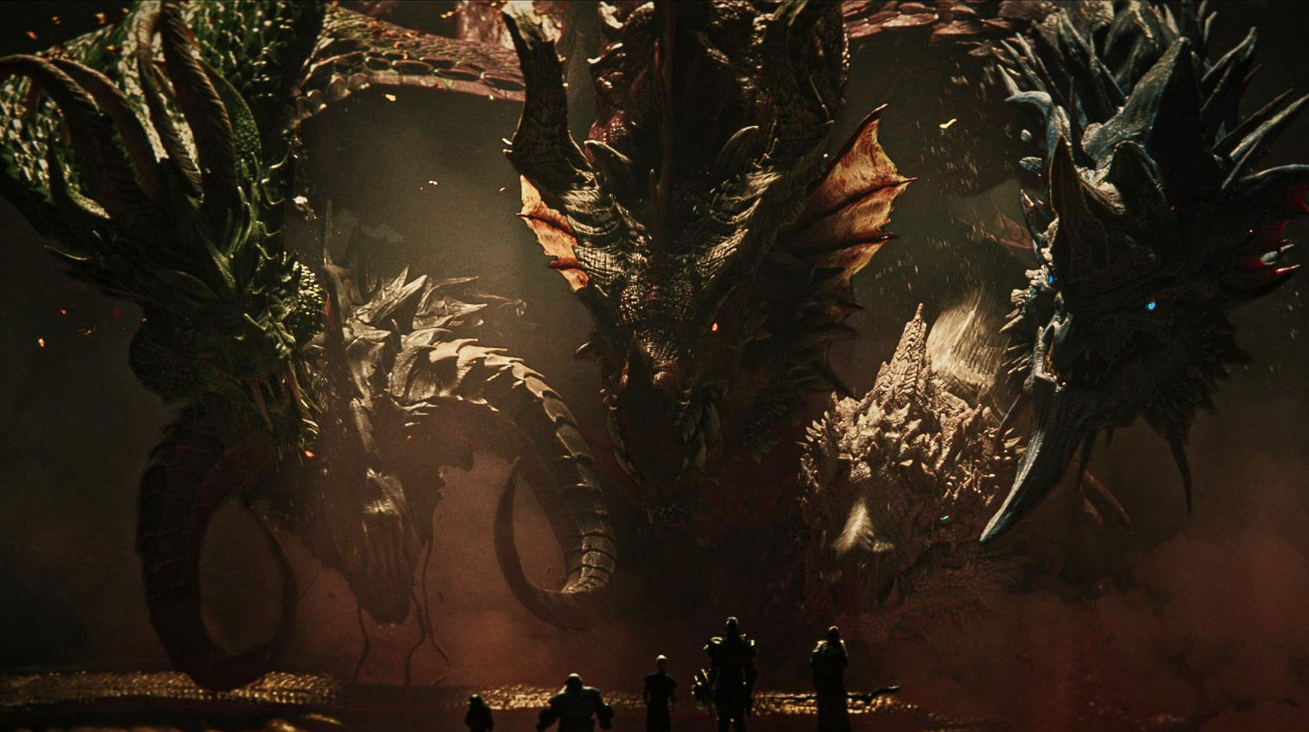
Episode 1, titled “The Queen’s Cradle,” transported me straight back to my D&D roots, like I was rolling a d20 for initiative all over again. This episode perfectly exemplified how organically your group in D&D forms—everyone falling into their roles, often stumbling into just the class or character you needed to make the party complete.
I loved the Dungeons & Dragons movie, but Secret Level felt like something entirely different. Where the movie leaned into comedy and blockbuster tropes (and did it well!), this felt like watching someone’s actual campaign unfold, more in the vein of The Legend of Vox Machina. It wasn’t trying to crack jokes every five minutes—it was about the adventure, the plot twists, and the unique chaos that only a D&D campaign can deliver. It gave us characters that we see in all of our own campaigns—like Tally, the gnome wizard, who was just so gnome-coded that it hurt but only in the best way. She embodied everything you’d expect from a gnome: clever, chaotic, and undeniably charming.
I’ve been hungry for more video game-related content to consume, and Secret Level came in clutch, like that one homie who mains the healer. Episode 2 takes us back with Sifu, delivering a poignant lesson about the cost of vengeance. Episode 3, meanwhile, is a hilarious meta dive into New World: Aeternum, starring Arnold Schwarzenegger in a comedic, MMORPG-flavored fever dream with Groundhog Day-style storytelling. And don’t even get me started on Episode 8, where Keanu Reeves takes the cockpit in the Armored Core universe and annihilates—not just with his mech, but with his flawless voice acting. It’s gritty, brutal, and one of the standouts of the series and I’m so sad that it was such a short episode!
But one of my absolute favorites? “Warhammer 40,000: And They Shall Know No Fear”. Listen, this episode had me ready to hop on my PC and load up Space Marine 2. This episode follows Captain Demetrian Titus post-Space Marine 2, and when I tell you this episode is brutal, brilliant, and so quintessentially 40K/Space Marine, I mean it. By the end, I was yelling, “What’s in the box?!” like I was David Mills in Se7en, only to nod solemnly and say, “Yep, that tracks for 40K.”
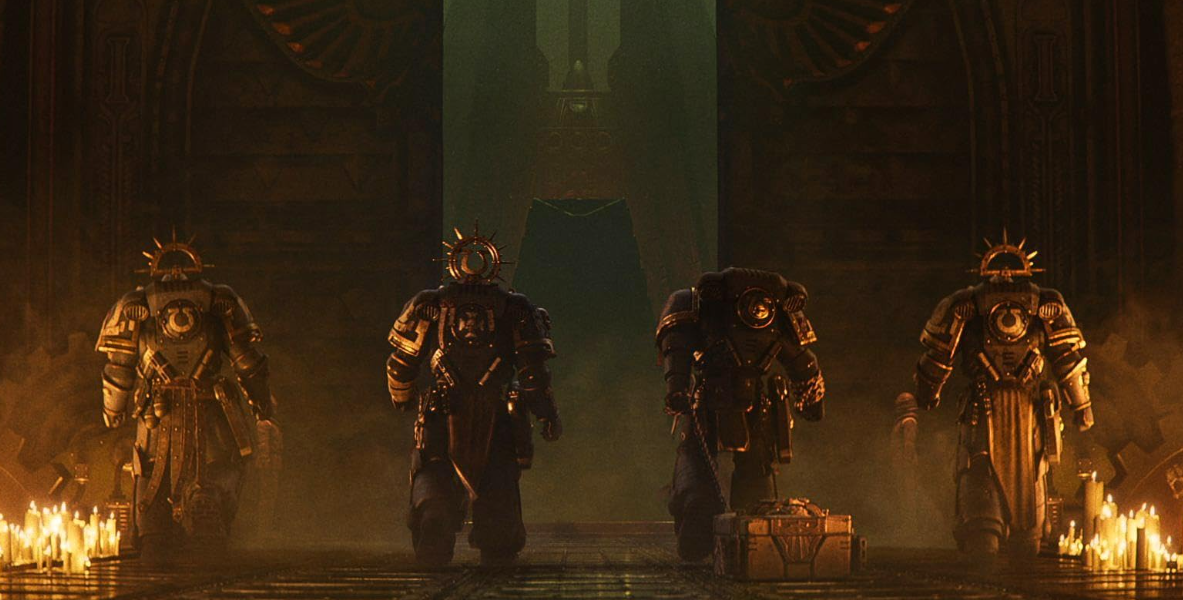
This episode has made me even more hyped for Henry Cavill’s upcoming live-action Warhammer 40K series and movies, also coming to Amazon Prime. While I know the two projects are unrelated, the sheer quality of this episode sets a high bar. I can’t help but hope Amazon maintains this level of excellence when it’s time for Cavill’s series to roll out.
Pac-Man’s Dark Side and Easter Egg Mania
Episode 6, though? Oh, y’all ain’t ready for Episode 6. If you know me, you know I live for hyper fixating on video game lore, and Pac-Man is one of my favorite rabbit holes. This episode wasn’t just a trip—it was a journey. Taking cues from Bandai Namco’s extensive library, it blended elements from Xevious, United Galaxy Space Force, and the upcoming platformer, Shadow Labyrinth.
And let me tell you, this episode was DARK. Like, “Why am I whispering ‘What the fuck?’ at my screen?” dark. I spent hours afterward diving into Reddit threads for easter egg confirmations because the lore runs deep. If you’re into theory-crafting, this episode is for you.
Hidden Gems and Forgotten Classics
What makes Secret Level so special is its range. Alongside heavy hitters like Mega Man and Unreal Tournament, it shines a spotlight on lesser-known titles like Concord, a game that had its plug pulled a month after launch and now only lives on in this series. There’s even an episode featuring Spelunky, Honor of Kings, and Crossfire.
And then there’s Exodus, based on an upcoming game from Archetype Entertainment set to release in late 2025. While the game hasn’t launched yet, its episode left me intrigued and eager to dive into it when it arrives.
Tim Miller didn’t just create an anthology—he built a shrine to gaming’s past, present, and future.
Why Aren’t Y’all Watching?
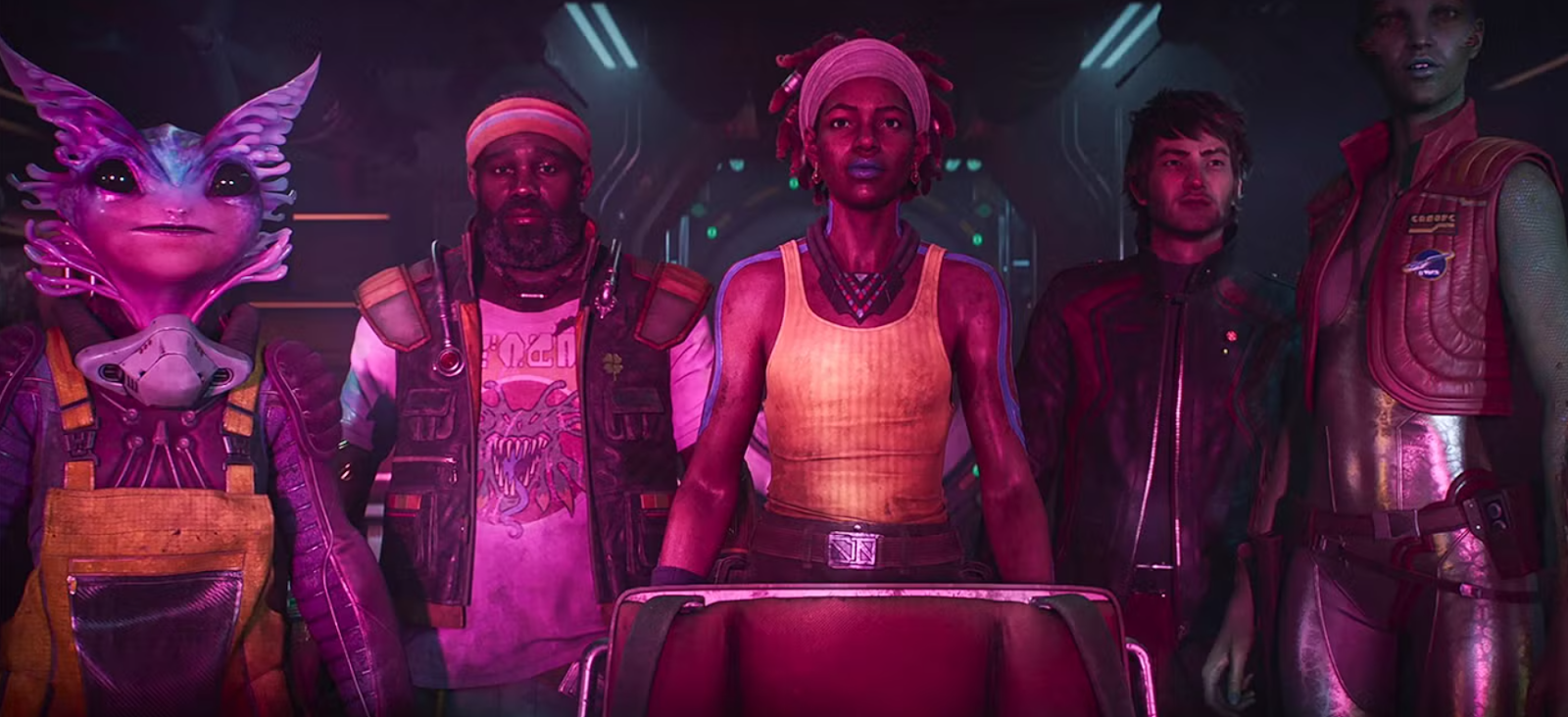
Even if you’re not a hardcore gamer, Secret Level is worth your time. The series doesn’t expect you to know every ounce of lore from these games, it gives you just enough to get invested while leaving room for curiosity. You might even find yourself wanting to pick up a controller or dive into PC gaming after watching.So, if you’ve got some time off this holiday season, do yourself a favor and check out Secret Level. All episodes for season one streaming now on Amazon Prime, and I promise, it’s the gift gamers didn’t know they needed.
Naliaah Castro is a NY-born blerd, gamer, and grad student juggling parenthood, work, and co-paneling on New Blerd Order. With a love for horror, RPGs, sci-fi, and fantasy, she’s probably either deep into a video game or rewatching Lord of the Rings for the hundredth time.
Want to get Black Nerd Problems updates sent directly to you? Sign up here! Follow us on BlueSky, Twitter, Facebook, YouTube, Twitch, and Instagram!
The post Not Enough of Y’all Are Talking About Secret Level, and It Don’t Sit Right with My Spirit appeared first on Black Nerd Problems.