
deerstalker
https://www.themarysue.com/the-10-best-one-shot-takes-in-movie-history/
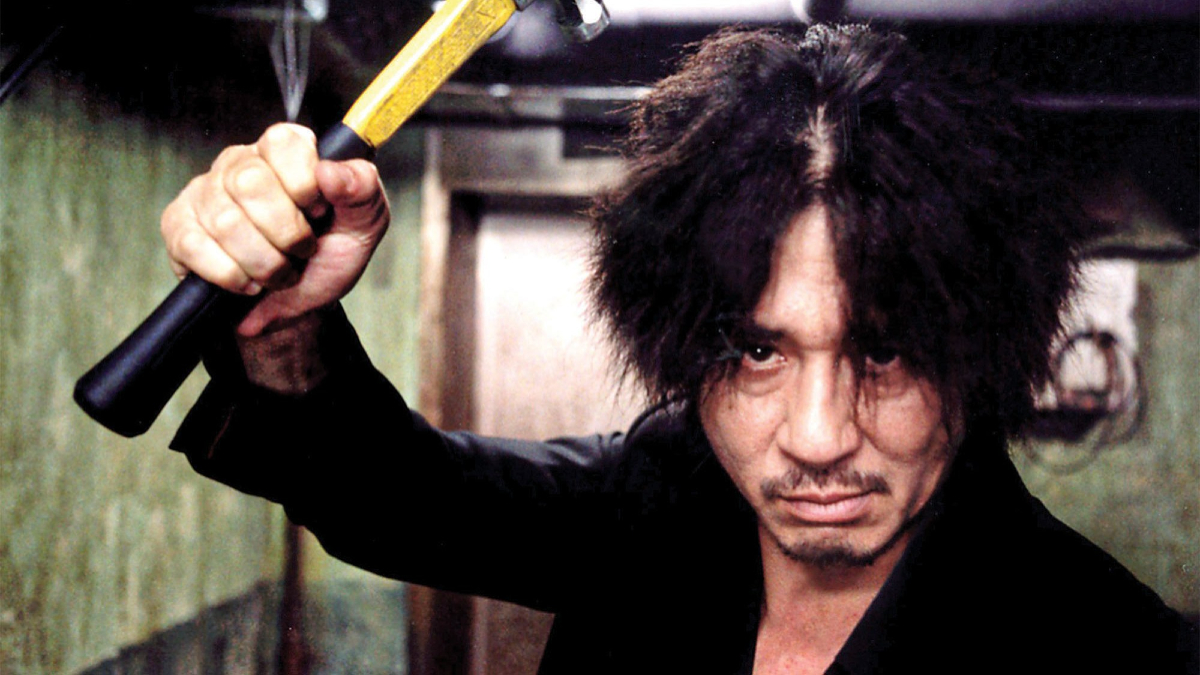
The long take. The one-shot. The oner. The infamous one-shot take may go by many different names, but like art, you know it when you see it. For anyone who has never been on a film set, a one-shot take is impressive – a ballet of actors, cameras and set pieces dancing around one another with uninterrupted cinematic flair. For those who have been on a film set, a successful oner is nothing short of a miracle – a budget annihilating, sanity destroying act of Providence that can make or break a movie. Impossibly beautiful and impossible to pull off, these are the 1o best one shot takes in movie history – all in one one-take of a list.
Goodfellas

The other Greatest Mob Movie Ever™ besides The Godfather, Martin Scorsese’s Goodfellas gives Francis Ford Coppola’s criminal masterpiece a run for its illicitly earned money. While Coppola’s trilogy features some gorgeous takes, nothing comes close to Goodfella‘s one-shot at the Copacabana. The glitz and glamour of the mafia life is put on full display as mobster Henry Hill ushers his date through the bowels of the restaurant – from coat check to kitchen to dance floor. The sequence is seduction itself, who wouldn’t aspire to be a gangster like young Henry Hill when it means you get to live the New York City high life like this? Sure, you’ve also gotta deal with your colleagues trying to whack you and the federal government coming for your blood – but hey, sequences like this make it all worth it.
The long take. The one-shot. The oner. The infamous one-shot take may go by many different names, but like art, you know it when you see it. For anyone who has never been on a film set, a one-shot take is impressive – a ballet of actors, cameras and set pieces dancing around one another with uninterrupted cinematic flair. For those who have been on a film set, a successful oner is nothing short of a miracle – a budget annihilating, sanity destroying act of Providence that can make or break a movie. Impossibly beautiful and impossible to pull off, these are the 1o best one shot takes in movie history – all in one one-take of a list.
Goodfellas
The other Greatest Mob Movie Ever™ besides The Godfather, Martin Scorsese’s Goodfellas gives Francis Ford Coppola’s criminal masterpiece a run for its illicitly earned money. While Coppola’s trilogy features some gorgeous takes, nothing comes close to Goodfella‘s one-shot at the Copacabana. The glitz and glamour of the mafia life is put on full display as mobster Henry Hill ushers his date through the bowels of the restaurant – from coat check to kitchen to dance floor. The sequence is seduction itself, who wouldn’t aspire to be a gangster like young Henry Hill when it means you get to live the New York City high life like this? Sure, you’ve also gotta deal with your colleagues trying to whack you and the federal government coming for your blood – but hey, sequences like this make it all worth it.

A woman is facing backlash online after revealing she called an ambulance during a severe hangover. Many viewers argued the situation didn’t warrant emergency services and accused her of wasting resources.
In her initial clip, which has garnered over 936,300 views, TikToker Gia (@gia.marini) films herself with an IV in her arm, looking visibly unwell. “U guys ever have a hangover so bad u call 911,” she writes in the video’s text overlay.
Sheila Atim has been crowned the new Queen of the Damned. The Ugandan-British actress, singer, and playwright has been cast as Akasha, the legendary Queen of the Damned in The Vampire Lestat, AMC’s next chapter in its Interview with the Vampire universe. Despite her name not ringing with instant familiarity, casting Sheila Atim as Akasha is a sound choice, given the actress’s formidable stage presence, her quiet intensity, and her ability to embody both grace and ferocity — the qualities that make her perfect for the role.
But before we familiarize ourselves with Sheila Atim’s career and why she’s the best choice for reintroducing one of gothic fiction’s most iconic queens to a whole new generation of viewers, let’s take a side-step to discuss the upcoming series, The Vampire Lestat. For those who haven’t seen Season 2 of The Interview with the Vampire, which first aired in May 2024, please beware, the following paragraphs contain spoilers.
Though it sounds like an entirely new series adjacent to The Interview with the Vampire, based on Anne Rice’s fantastic novels, The Vampire Lestat is actually Season 3 of the show, just rebranded with a new title. The first two seasons adapted the first book of the same name, and followed the vampire Louis recounting his past and tumultuous relationship with his maker, the vampire Lestat. At some point in Season 2, it’s revealed that Louis did not have the un-beating heart to actually kill Lestat, and that the latter is alive and well, with the series ending seeing the two reunited once again.
Due to its success, the series has been renewed for the third season and, given that it covers the events of the second book in Anne Rice’s The Vampire Chronicles, has been “rebranded” to The Vampire Lestat, aptly adhering to the second book’s title. The second book covers the events following The Interview with the Vampire, Lestat’s origins, and his encounter with Akasha, the progenitor of all vampires. This is where Sheila Atim comes in, bringing a depth of theatrical and screen experience to the role.

In The Vampire Lestat novel, Akasha is depicted as the most powerful and ancient figure in vampire lore, whose tragedy is inseparable from her power. She’s the origin and undoing of all vampires, who slept beneath centuries of dust until Lestat’s music and his pure rockstar aura-farming woke her from her slumber. Her re-emergence shifts the story completely, and the power dynamic between her as the creator of vampires and vampires as her creations shakes the vampire world to its core.
Her own origins as a mortal queen becoming the first vampire, her dual nature as both the creator and the destroyer, and her longing for companionship, particularly from Lestat, make her an immensely complex character to portray. This portrayal demands experience and depth, and given her award-winning stage work and her roles in film and television, such as The Woman King, Bruised, The Underground Railroad, and Doctor Strange in the Multiverse of Madness, Sheila Atim will undoubtedly deliver an astounding performance.

Atim also steps into a role famously portrayed by Aaliyah in the 2002 movie Queen of the Damned, which adapted sections from Anne Rice’s The Vampire Lestat and Queen of the Damned novels. The cinematic adaptation, though really entertaining, is only loosely based on the original material, which diminishes its storytelling quality. But it did introduce Aaliyah’s version of Akasha to the world, transforming the character from a literary myth into a pop-culture icon, untouchable, unapologetic, and beautifully dangerous.
Given her talent, Atim’s upcoming portrayal has the potential to honor Aaliyah’s legacy while also depicting Akasha’s depth and complexity as they were written by Rice. Atim’s previous performances showed that the actress doesn’t just perform her roles, but also inhabits them, and her upcoming portrayal could give us Akasha that’s ancient, intelligent, enduring, and quietly devastating. Of course, Atim’s upcoming performance will undoubtedly draw comparisons between hers and Aaliyah’s version of the character.

But those comparisons don’t have to be competitive in nature, because they can be viewed as a continuation. While the previous works, like The Interview with the Vampire and Queen of the Damned movies, did make some significant deviations from the source material, Aaliyah’s performance made Akasha into an immortal pop icon. Atim’s performance can still build on that legacy instead of trying to replace or surpass it, and expand the character further.
Sadly, we’ll have to wait until 2026 to witness Sheila Atim’s performance, as The Vampire Lestat still lacks a precise release date. For those interested in the character she’s set to portray, we strongly encourage you to watch The Queen of the Damned from 2002; the movie might’ve blasphemed against Anne Rice’s work, but it’s entertaining if you like goth culture and exceptionally good soundtracks. Also, Talamasca has also premiered, and the series unpacks even more of Anne Rice’s Immortal Universe.
The post Who Is Sheila Atim, the Queen of the Damned in ‘The Vampire Lestat’? appeared first on Black Girl Nerds.