
deerstalker
https://blackgirlnerds.com/holy-and-hoodoo-decolonizing-faith-through-a-black-lens/
“How you know I ain’t prayed and worked every root my grandmother taught me to keep you and that crazy brother of yours safe every day since you been gone?”
When Annie (Wunmi Mosaku) speaks those words in the Warner Bros film Sinners, it feels like testimony instead of dialogue. Like a confession passed down from the women who carried the weight of salvation and survival in the same weary hands. Most of us had an “Annie.” She was the one who held the stories we couldn’t write down because to write our own truths was illegal. The one who knew the power in a pot of greens simmered with prayer, who wiped fevers away with hands anointed in oil, who sent you back into the world healed, fed, and blessed. She knew scripture by heart, but also which herbs to brew for a stubborn cough, how to sweep bad energy out the door, how to whisper something over you before you walked into trouble.
Sinners might look like a film about spiritual warfare on the surface, but it’s doing something deeper. It pulls back the veil on how we’ve always lived at the intersection of faith and folk practices, even without the words to name it. It shows the tension and tenderness of holding onto Jesus while still reaching for the old ways that kept us alive long before we were stripped of our practices and handed what was deemed a respectable replacement.
Annie stood in the sacred space that’s always belonged to us, where the holy and Hoodoo aren’t at odds, but threads of the same divine tapestry. This isn’t about choosing between them; it’s remembering they’ve always been woven together, and how our survival has always been a spiritual practice. But why have African spiritual practices — tools of protection, healing, and power — been demonized so long? And how are Black folks reclaiming what was never fully lost?

The Demonization of African Spiritual Practices
From the moment our ancestors were stolen, their spiritual practices were a threat. Not because they were “evil,” but because they were powerful and rooted in connection, community, and a cosmology that didn’t need a white savior. Colonial powers couldn’t allow that kind of autonomy, so they labeled what our ancestors carried as witchcraft. As evil. As dangerous. That’s why “voodoo” is still shorthand in movies for something dark and dangerous. It’s why a Black woman burning sage gets side-eyed while anointing oil from the pulpit is seen as holy. Over time, those labels stuck, passed down from plantation to pulpit, until even we started to believe the lie. We’ve inherited suspicion of our own power, even as we unknowingly carry it forward.
It wasn’t enough to enslave Black bodies, they tried to enslave our spirits, too. Laws stripped away every tool of spiritual resistance. Drumming, gathering for worship without white oversight, African rites, all outlawed. It wasn’t about evil; it was about control. As D. Danyelle Thomas writes in The Day God Saw Me as Black, “Christianity, as it arrived on American plantations, is a contradictory, oppressive religion designed to impress upon the enslaved African that their bondage has been preordained.”
But the roots run deep, and to combat it, we did as we always do; alchemists transmute. No drums; we’ll make the pews and floorboards carry the rhythm. We’ll still call our ancestors’ names. And when they said there’s only one way to reach God, we knew better. We had already met God in the trees, in the water, in the wind.

The Legacy of Religious Syncretism and Survival
We were never just handed Christianity; we negotiated it. Adapted it. Transformed it. Syncretism wasn’t a concession; it was survival. When the old ways were stripped from our names, our bodies, our languages, we folded them into the new religion forced on us. The result was something uniquely ours, making space for both Jesus and our ancestors at the same table.
That’s why Hoodoo uses the Psalms; not just as sacred scripture, but as spellwork. Psalm 91 or 23 could be both prayer and protection. Anointing oil, drawn from Exodus, was a rootworker’s tool. And while Catholic missionaries preached saints, enslaved Africans saw Orishas in the stained-glass windows. This is where the lines blurred between “holy” and “heretical,” between the altar and the root bag, between the preacher and the prophetess laying hands and whispering prayers. Thomas writes, “The Black Christian tradition only exists because of the African cosmology through which it is both birthed and synchronized.” The shout on Sunday morning is the Ring Shout by another name. The spirit in church is the same one our ancestors called down by firelight, hidden from the enslaver’s eye.

The Modern Reclamation of Hoodoo and African Spirituality
The practices they tried to kill are now thriving. In the last decade, we’ve watched Hoodoo, Ifá, and other African spiritual systems resurge, with Black folks reclaiming them as living, legitimate faith traditions. Practices once used in secrecy are now taught in workshops, written in books, boldly displayed on altars no longer hidden in plain sight.
This revival has come with a hunger for something that sees us fully. For spirituality that doesn’t ask us to shrink, erase our ancestry, or choose between the divine and our Blackness. And it’s tied to broader movements: Black feminism, Afrofuturism, Black mental health. Instagram and TikTok have become classrooms and sanctuaries. Young Black women post reels showing how to dress a candle, work a jar, read a dream. Accounts share Yoruba prayers, tutorials, and reflections on ancestor veneration. These teachers claim space without apology: this is ours. This is holy. This is sacred. It always has been.
Decolonizing Christianity: What it Means and Looks Like
Decolonizing Christianity doesn’t mean throwing Jesus away. It means stripping away the whiteness wrapped around our theology. It’s reclaiming a God who looks like us, sounds like us, moves through our history with us. James Cone called it Black liberation theology. Womanist theologians like Delores Williams and Katie Cannon named how even liberation theology ignored Black women’s voices. Writers like Thomas ask: Whose image does it serve? Decolonizing faith isn’t rejecting Christianity. It’s remembering our ancestors never received it clean. They infused it with their cosmology, their rhythms, their knowing. Jesus didn’t come to uphold an empire; he came to liberate the oppressed.
We’ve been taught it’s either/or. But for many of us, it’s never been that simple. However, Annie’s words in Sinners remind us that prayer and conjure were never in competition. If you’ve ever cleaned your house before the new year, went to Watch Night service, counted your money at midnight, and ate black eyed peas, collard greens, and cornbread on New Year’s Day, you were practicing both! Christianity may be home, but it doesn’t have to be the only room in the house. Ancestral practices live here too, and reclaiming them isn’t betrayal. It’s remembering. Annie made us remember the women who raised us knowing the benefits of Jesus and juniper root.
Decolonizing faith isn’t abandoning God. It’s finding God as Black, with us, and for us. It’s loving Jesus and ourselves enough to ask: What did we lose when we let them tell us how to know God? And what might we find when we return to the knowing our grandmothers never forgot? Maybe that’s the revolution: standing in the middle of it all, hands raised, candles burning, prayers rising, declaring we are whole. We are holy. We are enough.
The post Holy and Hoodoo: Decolonizing Faith Through a Black Lens appeared first on Black Girl Nerds.
“How you know I ain’t prayed and worked every root my grandmother taught me to keep you and that crazy brother of yours safe every day since you been gone?”
When Annie (Wunmi Mosaku) speaks those words in the Warner Bros film Sinners, it feels like testimony instead of dialogue. Like a confession passed down from the women who carried the weight of salvation and survival in the same weary hands. Most of us had an “Annie.” She was the one who held the stories we couldn’t write down because to write our own truths was illegal. The one who knew the power in a pot of greens simmered with prayer, who wiped fevers away with hands anointed in oil, who sent you back into the world healed, fed, and blessed. She knew scripture by heart, but also which herbs to brew for a stubborn cough, how to sweep bad energy out the door, how to whisper something over you before you walked into trouble.
Sinners might look like a film about spiritual warfare on the surface, but it’s doing something deeper. It pulls back the veil on how we’ve always lived at the intersection of faith and folk practices, even without the words to name it. It shows the tension and tenderness of holding onto Jesus while still reaching for the old ways that kept us alive long before we were stripped of our practices and handed what was deemed a respectable replacement.
Annie stood in the sacred space that’s always belonged to us, where the holy and Hoodoo aren’t at odds, but threads of the same divine tapestry. This isn’t about choosing between them; it’s remembering they’ve always been woven together, and how our survival has always been a spiritual practice. But why have African spiritual practices — tools of protection, healing, and power — been demonized so long? And how are Black folks reclaiming what was never fully lost?
The Demonization of African Spiritual Practices
From the moment our ancestors were stolen, their spiritual practices were a threat. Not because they were “evil,” but because they were powerful and rooted in connection, community, and a cosmology that didn’t need a white savior. Colonial powers couldn’t allow that kind of autonomy, so they labeled what our ancestors carried as witchcraft. As evil. As dangerous. That’s why “voodoo” is still shorthand in movies for something dark and dangerous. It’s why a Black woman burning sage gets side-eyed while anointing oil from the pulpit is seen as holy. Over time, those labels stuck, passed down from plantation to pulpit, until even we started to believe the lie. We’ve inherited suspicion of our own power, even as we unknowingly carry it forward.
It wasn’t enough to enslave Black bodies, they tried to enslave our spirits, too. Laws stripped away every tool of spiritual resistance. Drumming, gathering for worship without white oversight, African rites, all outlawed. It wasn’t about evil; it was about control. As D. Danyelle Thomas writes in The Day God Saw Me as Black, “Christianity, as it arrived on American plantations, is a contradictory, oppressive religion designed to impress upon the enslaved African that their bondage has been preordained.”
But the roots run deep, and to combat it, we did as we always do; alchemists transmute. No drums; we’ll make the pews and floorboards carry the rhythm. We’ll still call our ancestors’ names. And when they said there’s only one way to reach God, we knew better. We had already met God in the trees, in the water, in the wind.
The Legacy of Religious Syncretism and Survival
We were never just handed Christianity; we negotiated it. Adapted it. Transformed it. Syncretism wasn’t a concession; it was survival. When the old ways were stripped from our names, our bodies, our languages, we folded them into the new religion forced on us. The result was something uniquely ours, making space for both Jesus and our ancestors at the same table.
That’s why Hoodoo uses the Psalms; not just as sacred scripture, but as spellwork. Psalm 91 or 23 could be both prayer and protection. Anointing oil, drawn from Exodus, was a rootworker’s tool. And while Catholic missionaries preached saints, enslaved Africans saw Orishas in the stained-glass windows. This is where the lines blurred between “holy” and “heretical,” between the altar and the root bag, between the preacher and the prophetess laying hands and whispering prayers. Thomas writes, “The Black Christian tradition only exists because of the African cosmology through which it is both birthed and synchronized.” The shout on Sunday morning is the Ring Shout by another name. The spirit in church is the same one our ancestors called down by firelight, hidden from the enslaver’s eye.
The Modern Reclamation of Hoodoo and African Spirituality
The practices they tried to kill are now thriving. In the last decade, we’ve watched Hoodoo, Ifá, and other African spiritual systems resurge, with Black folks reclaiming them as living, legitimate faith traditions. Practices once used in secrecy are now taught in workshops, written in books, boldly displayed on altars no longer hidden in plain sight.
This revival has come with a hunger for something that sees us fully. For spirituality that doesn’t ask us to shrink, erase our ancestry, or choose between the divine and our Blackness. And it’s tied to broader movements: Black feminism, Afrofuturism, Black mental health. Instagram and TikTok have become classrooms and sanctuaries. Young Black women post reels showing how to dress a candle, work a jar, read a dream. Accounts share Yoruba prayers, tutorials, and reflections on ancestor veneration. These teachers claim space without apology: this is ours. This is holy. This is sacred. It always has been.
Decolonizing Christianity: What it Means and Looks Like
Decolonizing Christianity doesn’t mean throwing Jesus away. It means stripping away the whiteness wrapped around our theology. It’s reclaiming a God who looks like us, sounds like us, moves through our history with us. James Cone called it Black liberation theology. Womanist theologians like Delores Williams and Katie Cannon named how even liberation theology ignored Black women’s voices. Writers like Thomas ask: Whose image does it serve? Decolonizing faith isn’t rejecting Christianity. It’s remembering our ancestors never received it clean. They infused it with their cosmology, their rhythms, their knowing. Jesus didn’t come to uphold an empire; he came to liberate the oppressed.
We’ve been taught it’s either/or. But for many of us, it’s never been that simple. However, Annie’s words in Sinners remind us that prayer and conjure were never in competition. If you’ve ever cleaned your house before the new year, went to Watch Night service, counted your money at midnight, and ate black eyed peas, collard greens, and cornbread on New Year’s Day, you were practicing both! Christianity may be home, but it doesn’t have to be the only room in the house. Ancestral practices live here too, and reclaiming them isn’t betrayal. It’s remembering. Annie made us remember the women who raised us knowing the benefits of Jesus and juniper root.
Decolonizing faith isn’t abandoning God. It’s finding God as Black, with us, and for us. It’s loving Jesus and ourselves enough to ask: What did we lose when we let them tell us how to know God? And what might we find when we return to the knowing our grandmothers never forgot? Maybe that’s the revolution: standing in the middle of it all, hands raised, candles burning, prayers rising, declaring we are whole. We are holy. We are enough.
The post Holy and Hoodoo: Decolonizing Faith Through a Black Lens appeared first on Black Girl Nerds.
One of the biggest changes HBO’s The Last of Us made in season one was to forego the presence of spores. In the video games characters have to wear gas masks when they travel because cordyceps is literally in the air. Survivors always have to worry about the terrible possibility of inhaling floating spores. While terrifying, those airborne nightmares didn’t make sense for a TV show where you prefer to see world-class actors emote. But season two’s fifth episode found a way to finally introduce spores to the series in a truly horrifying way that doesn’t mean every performer suddenly has to cover up their face.
The only problem was the characters on The Last of Us inexplicably aren’t worried about their existence nearly as much as they should be.

Season two’s fifth episode began with high-ranking WLF leader Hanrahan, the woman who welcomed Jeffrey Wright’s Isaac into the group when he defected from FEDRA. She was meeting with Sergeant Elise Park. Elise’s unit had been charged with securing a hospital for the organization. Hanrahan was there on Isaacs’s orders while he dealt with the broken Seraphite treaty. Elise’s loyal soldiers feared Hanrahan would execute their leader for “killing her own soldiers,” a group that included someone named Leon.
Elise’s story absolved her of any wrongdoing in the most unimaginable, horrible way. She told Hanrahan about how they’d been clearing floors. The few infected they expected to encounter didn’t worry them. The bigger problem was the basement, which they could only reach via a single stairwell. It was also where the group’s older members said “they brought the first cordyceps patients in ’03.”
The day before earlier Elise sent a squad down to the basement to clear section B1. They found nothing there, “not even rats.” So earlier that morning she sent a second squad to check out the next section. What they discovered was maybe the scariest development mankind has known since Infection Day. Elise’s report was beyond chilling.
So today, B2, hoping to find more of the same, I sent a second squad down and I put Leon in charge ’cause he’s my best. Few minutes in he radios back there’s cordyceps on the wall, the floors. Chances are they’ll find infected next, but that’s what they were down there for so I told him to proceed. Five minutes later he radios again, but this time he….he was struggling to breath. He could hardly talk. I thought maybe he had been bit. I said, “Leon, were you bit?” He said….he said, “It’s in the air.” He said, “It’s in the air. Seal us in.” And I knew it wasn’t in the vents or we all would have been infected weeks ago. So I scrambled my other team, and we locked the only door to B2, and we locked the only door to B1. And we did what Leon said. We sealed them in.

Hanrahan confirmed nothing else had gotten out of that basement and no one else had been infected before leaving. As she walked out, she revealed why this sad development was especially tragic for Elise, who had acted with true bravery when she sealed her own soldiers’ fate. Leon is her son.
Later in the episode Ellie arrived at that same Seattle hospital looking for Nora, one of the people who helped Abby kill Joel. In a sequence adapted from The Last of Us Part II, Nora fled. But she ended up trapped in a barricaded hallway. With no way out she jumped into a slightly ajar(!) elevator shaft. The elevator cable then snapped, bringing her down to B2. Ellie chased after her, but the terrified WLF guards did not. Ellie soon learned why they stopped chasing her.
She found people, including Leon, alive and integrated into the cordyceps lined walls. B2 was a fungal nightmare of horror. With each breath, those lost soldiers emitted the very same spores that had doomed them. Those floating fungi were everywhere. And while Ellie’s immunity kept her safe, Nora instantly succumbed to the infection. Within a couple of minutes a coughing Nora could barely breathe or move. Her words and thoughts became sluggish. While we didn’t see it, by the time Ellie was done torturing her, Nora could barely talk. Her mind and fortitude had also faltered. She had initially refused to give. upher friend Abby. By the end she gave Ellie two words for Ellie to locate her nemesis.
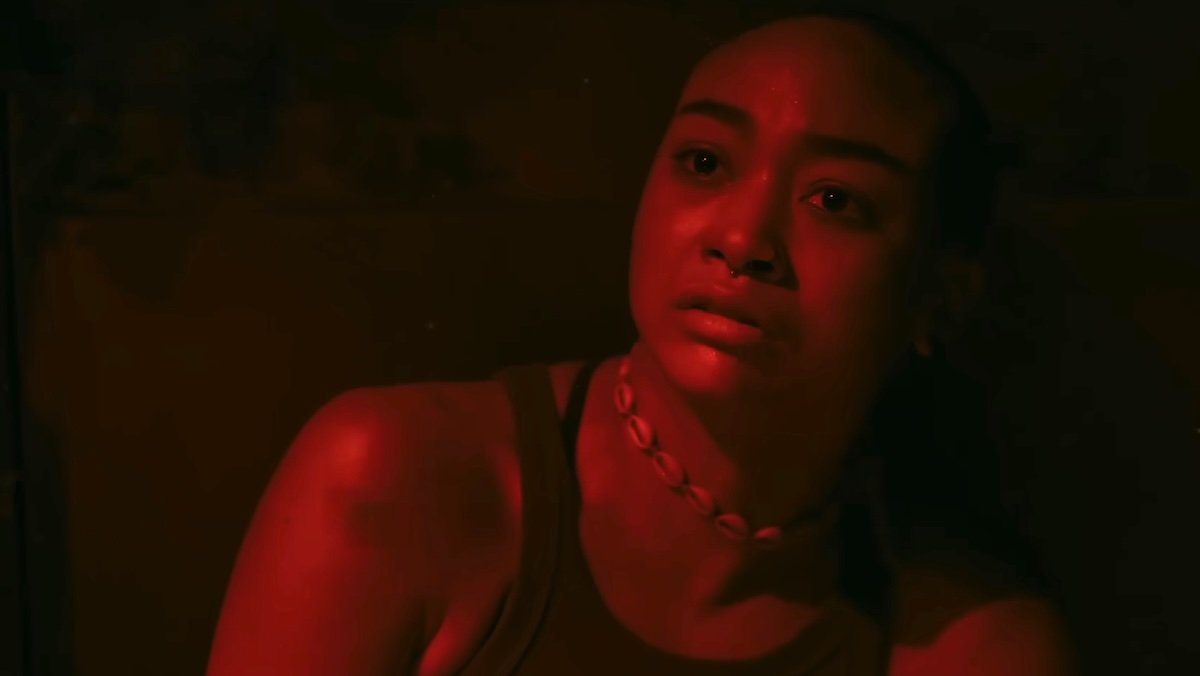
Both Elise’s story and Ellie’s trip through B2 made the wait for spores on HBO’s series worth it. Hearing about Leon’s ill-fated mission was terrifying enough on its own. Seeing him entrenched into that wall, and seeing Nora meet the same end, was even more horrific than Elise or Hanrahan could have imagined.
But knowing what’s down there is bad enough that they should have been far more worried about the presence of spores! Hanrahan’s line about how the hospital is “a resource we can’t afford to lose” tried to explain why WLF didn’t immediately abandon the building before burning it down, but it wasn’t a good explanation. That attitude makes more sense in the game where mankind had already been living with the presence of spores for many years. People there have masks on them and know what spores can and can’t do. In the world of HBO’s The Last of Us, finding out cordyceps was in the air should have resulted in a far more urgent, far more appropriate response.
Sure, those floating fungi hadn’t made their way up the vents yet. That also helps logically explain why every character won’t suddenly need to wear a mask on the show, an obviously smart creative choice. But considering no one even knew spores existed that morning how could they assume they wouldn’t eventually make their way up to higher floors? Or to the outside? Why would any smart, capable leader—of which WLF clearly has many—treat them as anything other than an existential crisis?

Even if they truly believe the hospital is important enough it must operate while a fate worse than death dances in the air beneath their feet (a truly absurd decision), shouldn’t they have at least closed those elevator shafts for good? Nora got into one because it was still open. They all just assumed an old elevator hanging on a rusted cable was going to keep them safe forever? Or, again, floating spores wouldn’t maybe float up? What if a hole in a wall of a broken down building created an updraft?
One of the best things about The Last of Us season two is the matter-of-fact way people talk about death and violence. They talk about infected and violence the way we might talk about the weather. It makes the world they inhabit feel authentic and lived in. Cordyceps and raiders are the reality they know. They’ve adjusted to both. But that’s not true of floating spores. They are a totally different kind of nightmare than anything else they’ve ever encountered. Forgetting guns and zombie bites. Breathing itself can now kill them.
W.L.F. is run by people who know what they’re doing. Having them under react to a horrific discovery was not only illogical, it under cut the otherwise superb introduction of spores to HBO’s The Last of Us. The characters should find them as scary as we do.
Mikey Walsh is a staff writer at Nerdist. He wonders what the spores smell and taste like. You can follow him on Bluesky at @burgermike. And also anywhere someone is ranking the Targaryen kings.
The post THE LAST OF US Introduced Cordyceps Spores with One Surprising Problem appeared first on Nerdist.
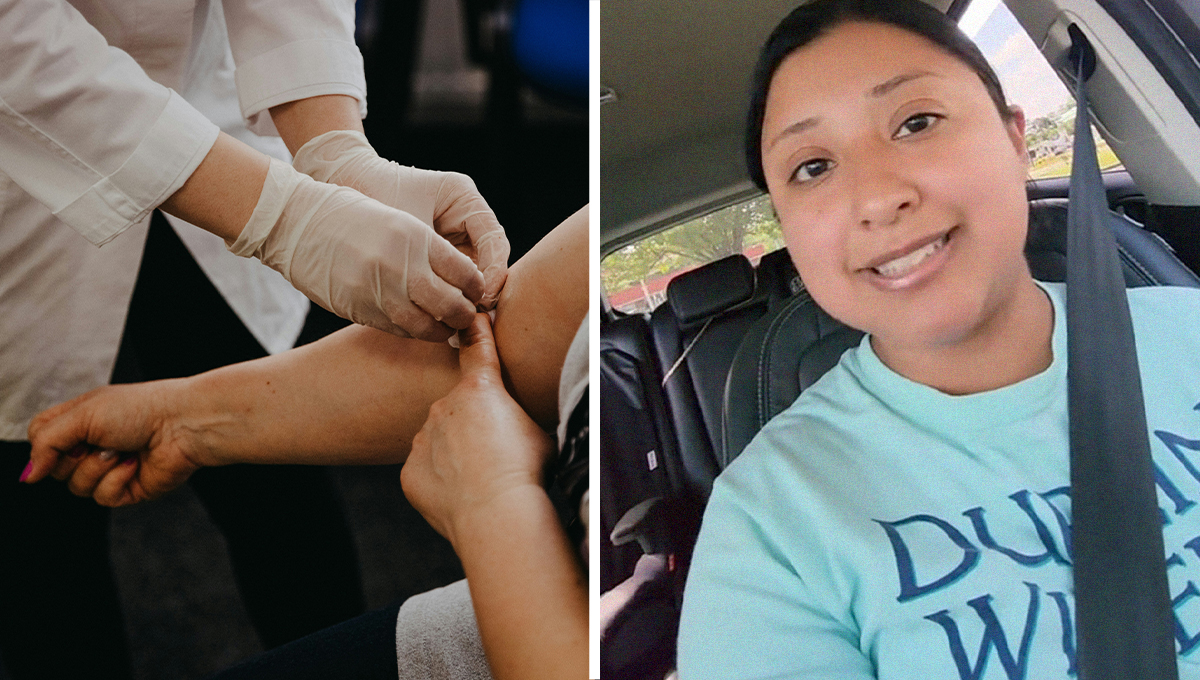
Donating plasma is one of the lesser known ways people can make some extra money without doing much. You just show up at a donation center, endure the prick of a needle, and collect some cash at the end.
It’s safe, fast, and easy.